Last updated October 15, 2026
How to Hire a ADU Contractor in Houston: A Step-by-Step Guide
Here’s a number most Houston homeowners never hear: a poorly written ADU contract costs more in change orders than the original bid about a third of the time. Not because contractors are crooks. Because accessory dwelling units sit in a strange middle ground between new construction and remodeling, and most contracts are written like kitchen remodels, where scope is simple. An ADU has foundation work, separate electrical service, its own HVAC, new plumbing lines, and a second address. When the contract doesn’t spell out who owns each of those decisions, the homeowner owns the surprise. This guide walks through how to hire an ADU contractor in Houston without learning that lesson the expensive way, and you can find more guides & resources on our blog. You’ll learn the five commitments worth asking for in writing, the license checks that take five minutes, and the payment schedule that keeps you protected at every stage.
Quick Answer
To hire an ADU contractor in Houston, verify their Texas license and insurance through the TDLR database, review their ADU-specific portfolio, and require five written commitments before signing: a fixed or capped price, a defined timeline, a written scope of work, a named warranty, and a milestone-based payment schedule. The contractor worth hiring will put all five in writing before demolition starts, not after.
Table of Contents
- Step 1: Verify the License and Insurance Texas Actually Requires
- Step 2: Ask for ADU Experience, Not Construction Experience
- Step 3: Review the Portfolio with a Skeptical Eye
- Step 4: Get the Five Commitments in Writing
- Step 5: Check the Contract Like a Building Inspector
- Step 6: Structure Payments Around Work Completed
- Common Mistakes to Avoid
- When to Call a Professional
- Frequently Asked Questions
- The Bottom Line
Step 1: Verify the License and Insurance Texas Actually Requires
Texas does not require a statewide general contractor license, which surprises a lot of Houston homeowners. What Texas does require is that anyone performing electrical, plumbing, or HVAC work on your ADU holds a state license through the Texas Department of Licensing and Regulation, or TDLR for short. A general contractor can pull a building permit, but the tradespeople doing the wiring, the gas line, and the mini-split install each need their own credential.
Here’s how to verify all of it in under five minutes:
- Go to the TDLR license search page at tdlr.texas.gov.
- Search the contractor’s business name and the owner’s personal name. Many Houston contractors operate under a DBA that won’t match their license.
- Confirm the license type matches the scope: electricians need a TECL or residential appliance installer license, plumbers need a Tradesman or Master Plumber license, HVAC techs need a TACL air conditioning contractor license.
- Check the license status. Any status other than “Active” is a red flag.
- Request a certificate of insurance directly from the contractor’s carrier, not a photocopy the contractor hands you. The certificate should list you as the certificate holder and show general liability coverage of at least $500,000, though $1 million is standard for ADU work in Houston.
One thing we tell every Houston homeowner: if a contractor hesitates or deflects when asked for license numbers, the conversation is already over. Legitimate ADU builders expect this question and answer it in thirty seconds. The guy who says “we’re working on getting that renewed” is telling you he’s not.
Insurance matters more for an ADU than for a kitchen remodel because you’re adding a second dwelling to your property. That changes your own homeowner’s policy, and it changes who gets sued if a worker is injured on your lot. Workers’ compensation coverage is not required for every Texas contractor, so if a contractor doesn’t carry it, make sure they carry enough liability coverage and that their subcontractors are insured. Get it in writing.
Step 2: Ask for ADU Experience, Not Construction Experience
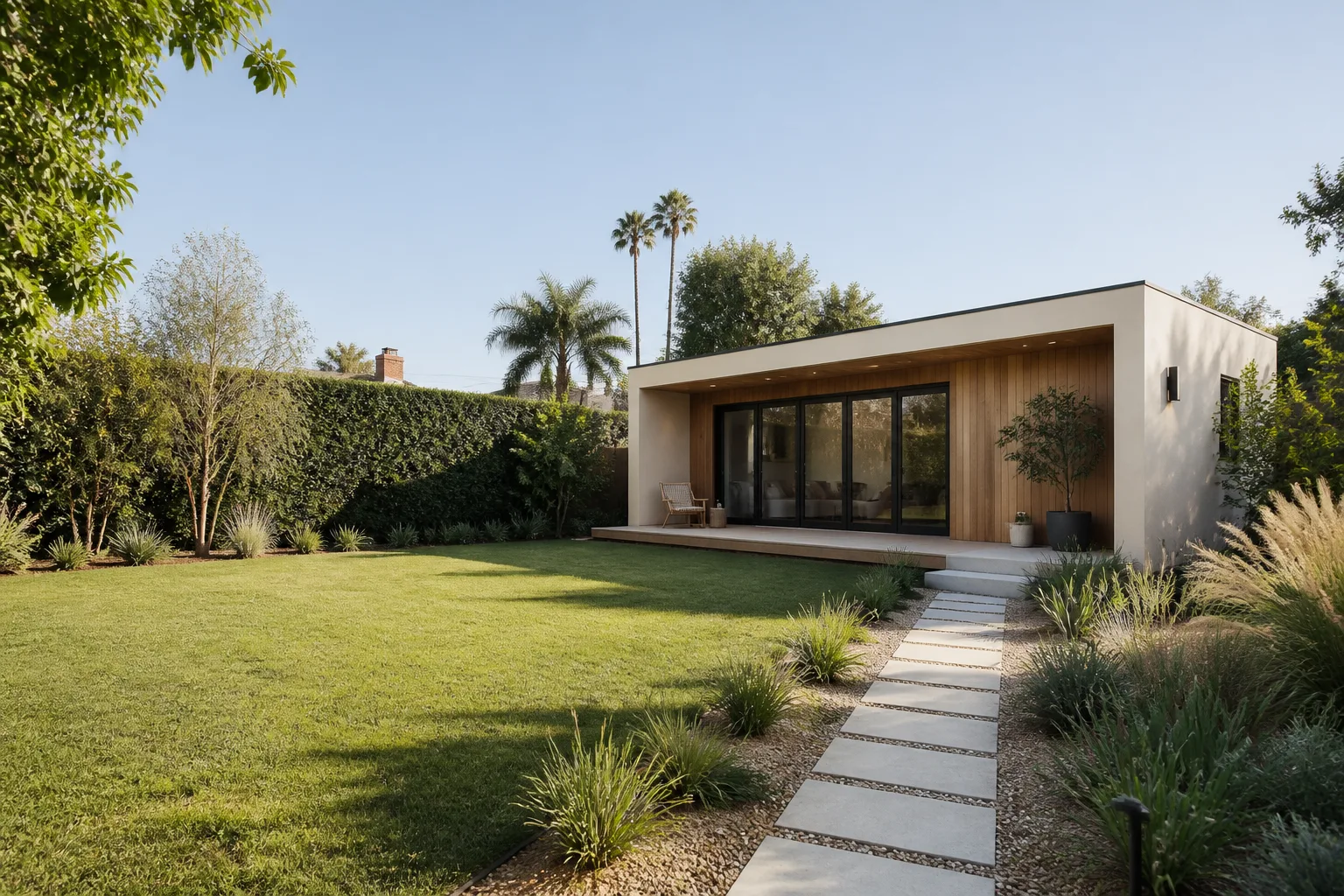
Here’s the thing about ADUs in Houston, and we see this pattern repeated in neighborhoods from Montrose to Meyerland: a contractor with twenty years of home-building experience can still stumble on a 600-square-foot accessory dwelling unit. An ADU is a small house with big-house complexity. A general remodeler might frame walls and hang drywall beautifully, but ADUs require separate meter decisions, sewer tie-in questions, setback variances, and foundation choices that a kitchen contractor never touches. When a homeowner asks “how long have you been building?” they’re asking the wrong question. The right question is “how many ADUs have you finished, and may I call two of those homeowners?”
Specific portfolio questions to ask a Houston ADU contractor:
- How many ADUs have you completed in Houston in the last three years? The city’s permitting process for accessory dwelling units changed significantly in recent years, and experience navigating Houston’s specific planning department matters.
- May I see a finished project in person, not just photos? Photos hide stucco cracks and drainage issues. A contractor who can arrange a visit with a past client has nothing to hide.
- Have you built on a lot like mine? A contractor who has only worked on sprawling Katy lots may not understand the setback constraints of a 50-foot-wide bungalow lot in the Heights.
- How many change orders did your last three ADU projects have? The answer tells you more than any sales pitch. A good contractor should be able to say “none” or “one small one” and explain why.
We also recommend asking about prefab and panelized systems. Houston homeowners interested in an ADU built by experienced Houston builders often hear about Abodu, Boxabl, and similar manufacturers. A contractor who can explain the difference between a factory-built Abodu unit and a stick-built backyard cottage, and who can tell you which makes sense for your lot, your soil, and your timeline, is a contractor who has actually done this work. Someone who says “we can build anything” without specifics probably hasn’t.
Step 3: Review the Portfolio with a Skeptical Eye
A portfolio is a highlight reel. Every contractor shows their best three projects. Your job is to find out what those projects cost, how long they took, and what went wrong. Here’s the part most Houston homeowners skip: asking about the projects that didn’t go smoothly.
When you sit down with a contractor, pull up their portfolio and ask about specifics:
- What was the original budget and final price on this project? A contractor who can answer without checking notes has integrity baked into their process. One who stumbles might be hiding a 40% overrun.
- How many days past the original timeline did this job run, and why? Weather delays are normal in Houston. A contractor who blames everything on weather despite a six-month overrun is not telling the full story.
- What was the hardest part of this build? This question earns an honest answer from good contractors and a canned answer from bad ones. The honest answer usually involves a foundation surprise or a utility conflict, and how they solved it.
One Houston-specific detail worth watching: soil movement. The clay-heavy soils across much of Harris County expand and contract with moisture, which means foundation choices on an ADU matter more than they do in, say, Dallas or Austin. A contractor’s portfolio should show foundation work that accounts for this. Ask whether they used pier-and-beam or slab, and why. In the Heights and Garden Oaks, where older pier-and-beam homes are common, ADU foundations often need to match the main house’s structural approach. A contractor who can’t explain their foundation reasoning is guessing.
Also watch for material choices in the portfolio. Houston’s humidity punishes cheap materials. If a contractor’s ADU portfolio shows warped siding, bubbling paint, or window flashing that looks like an afterthought, those are signs of how your project will age. Ask whether they work with James Hardie siding and similar humidity-resistant products. Contractors who build for Houston’s climate know the difference between a product rated for coastal humidity and one that isn’t.
Step 4: Get the Five Commitments in Writing Before You Sign
Most Houston homeowners interview a contractor, hear a verbal price, and sign a contract with a one-page scope attached. That’s the path to a bad ending. Here’s the reframe: stop asking about years in business and start asking for five written commitments. A real ADU specialist will put all five in the contract without being asked twice. The contractor who balks at any one of them is telling you something important.
Here are the five commitments worth requiring, in writing, before signing an ADU contract in Houston:
- A written price before any work begins. Not a verbal estimate, not a “ballpark figure,” not a number scribbled on a business card. A formal written proposal with line items. If a contractor won’t produce a written price before demolition starts, walk away.
- A defined arrival and work window. Your contractor should tell you when crews will be on site each day and what the overall project timeline looks like. Not “we’ll get to it when we get to it.” A real schedule, in writing, with milestone dates.
- A clean job site commitment. An ADU build is messy work, but the site should be cleaned at the end of each day and fully cleaned at the end of the project. If the contract doesn’t mention site cleanliness, add it. A contractor who leaves nails in your lawn is a contractor who leaves problems elsewhere.
- A written guarantee on the work, with a defined term. Ask what happens if the work fails. A real answer names a specific guarantee period and a process for getting a return visit. If the contractor says “we stand behind our work” but won’t name the term, that’s not a guarantee.
- A free return visit if the work fails during the guarantee period. This is the commitment that separates serious builders from everyone else. At Lodgewick ADU Houston, this is formalized in the 365-Day Done Right Promise: if the work isn’t right, we come back and make it right, and that commitment is in writing on every project before work begins. Russ Delmar, our owner, has run every Lodgewick project under this same standard since the company was founded in 2010.
These five commitments are what we call The Kingswell Way, named for the Kingswell family of home-service companies that Lodgewick ADU Houston is part of. It’s simple: say the price before the work, show up in the window given, leave the place cleaner than found, put the guarantee in writing, and come back if it fails. A lodge is a small house on a larger property, which is exactly what an ADU is, and the way we build them reflects that same clarity.
Step 5: Check the Contract Like a Building Inspector
Once you have a contractor who agrees to the five commitments, the contract itself needs a close read. Most Houston homeowners sign whatever contract is placed in front of them. That’s a mistake. Here is a plain-English checklist of what every Houston ADU contract must include:
- Full scope of work. Every room, every system, every material, every finish. “ADU build, 600 square feet” is not a scope. “600 SF ADU with 2 bedrooms, 1 bath, mini-split HVAC, tankless water heater, James Hardie siding, LVP flooring throughout, 200-amp subpanel, sewer tie-in to city main” is a scope.
- A fixed price or a capped cost-plus price. Fixed price means the price doesn’t change unless you change the scope. Cost-plus means you pay actual costs plus a percentage markup. Cost-plus without a cap is dangerous. Cost-plus with a written cap and a defined markup percentage can be fair, but the cap must be in the contract.
- A payment schedule tied to milestones. More detail below, but the key is that you never pay ahead of the work completed. No contractor should ever ask for 50% down on a new ADU build.
- A defined timeline with start and completion dates. “Approximately six months” is not a timeline. “Substantial completion by [date], with weather-related extensions limited to 30 days” is a timeline.
- Warranty language. What is covered, for how long, and what the process is for filing a claim. If the guarantee isn’t in the contract, it doesn’t exist.
- Change-order process in writing. Every change should be documented, priced, signed by both parties, and attached to the original contract. Verbal change orders are how $60,000 ADUs become $90,000 ADUs.
Red flags that are legal but financially dangerous: vague allowances that look like cheap line items but give the contractor room to overrun, cost-plus contracts without a cap, and any contractor who says “don’t worry about that, we’ll handle it verbally.” No. Written or nothing. The homeowner who gets burned in Houston is almost never the one who asked for everything in writing. It’s the one who trusted a handshake.
Step 6: Structure Payments Around Work Completed
The payment schedule is where Houston homeowners have the most leverage, and it’s where most of them get hurt. Here’s the rule: never pay for work that hasn’t been completed. A contractor who asks for a large upfront deposit is using your money to fund their cash flow. That’s not how a real builder operates.
A reasonable milestone-based payment schedule for a Houston ADU project looks something like this:
- Deposit: 10-15% at contract signing. This covers design fees, permit applications, and initial planning. Anything more than 15% is a red flag unless custom design work is part of the scope.
- Foundation and site work: 15-20% after the slab or piers are poured and inspected. You pay when the concrete is in and the city inspection has passed, not before.
- Framing and rough-in: 20-25% after the walls are up, the roof is on, and the electrical, plumbing, and HVAC rough-ins have passed inspection. This is the biggest single milestone because it’s the point of no return.
- Finish work: 15-20% after drywall, flooring, trim, and paint are complete. The ADU should be visually recognizable as a finished space.
- Final completion: 10-15% withheld until the final inspection passes, the punch list is done, and the certificate of occupancy is in hand. Never release the final payment before the city signs off.
That schedule varies somewhat depending on whether you’re building a stick-built ADU or a prefab unit from a company like Abodu or Cover, where a larger portion of the cost lands when the modules are delivered and set. But the principle holds: pay for work completed, never for work promised. If a contractor asks you to pay more than the work that’s been done, that’s a cash-flow problem on their end, and you don’t want to be part of it.
Houston’s permitting process also plays into this. The city inspection schedule dictates when payments should be released. A good contractor will tie payment milestones to inspection milestones, which protects both of you. For more on how this works in practice, see our guide to home additions in Houston, where the same principles apply at a larger scale.
Common Mistakes to Avoid
- Hiring the lowest bid without comparing scope. Houston is a big market, and ADU bids can vary by 40% or more. The lowest bid is usually missing something: a sewer line, a foundation allowance, a permit fee. Compare line items, not bottom lines.
- Signing a contract without reading the warranty language. If the contract doesn’t name a guarantee period and a return-visit policy, you have no warranty. Period.
- Paying a large upfront deposit. A 50% deposit on an ADU in Houston is a giant red flag. Legitimate builders don’t need half the money to start.
- Allowing verbal change orders. “Let’s just add that window and we’ll figure it out later” is how budgets explode. Every change gets written, priced, and signed.
- Skipping the license and insurance check. Five minutes on the TDLR website can save you from hiring an unlicensed electrician who burns down your new ADU and disappears.
- Ignoring Houston’s soil and drainage conditions. A contractor who doesn’t plan for clay soil movement and heavy rainfall is building a future foundation repair. Ask about site grading and drainage in the contract.
When to Call a Professional
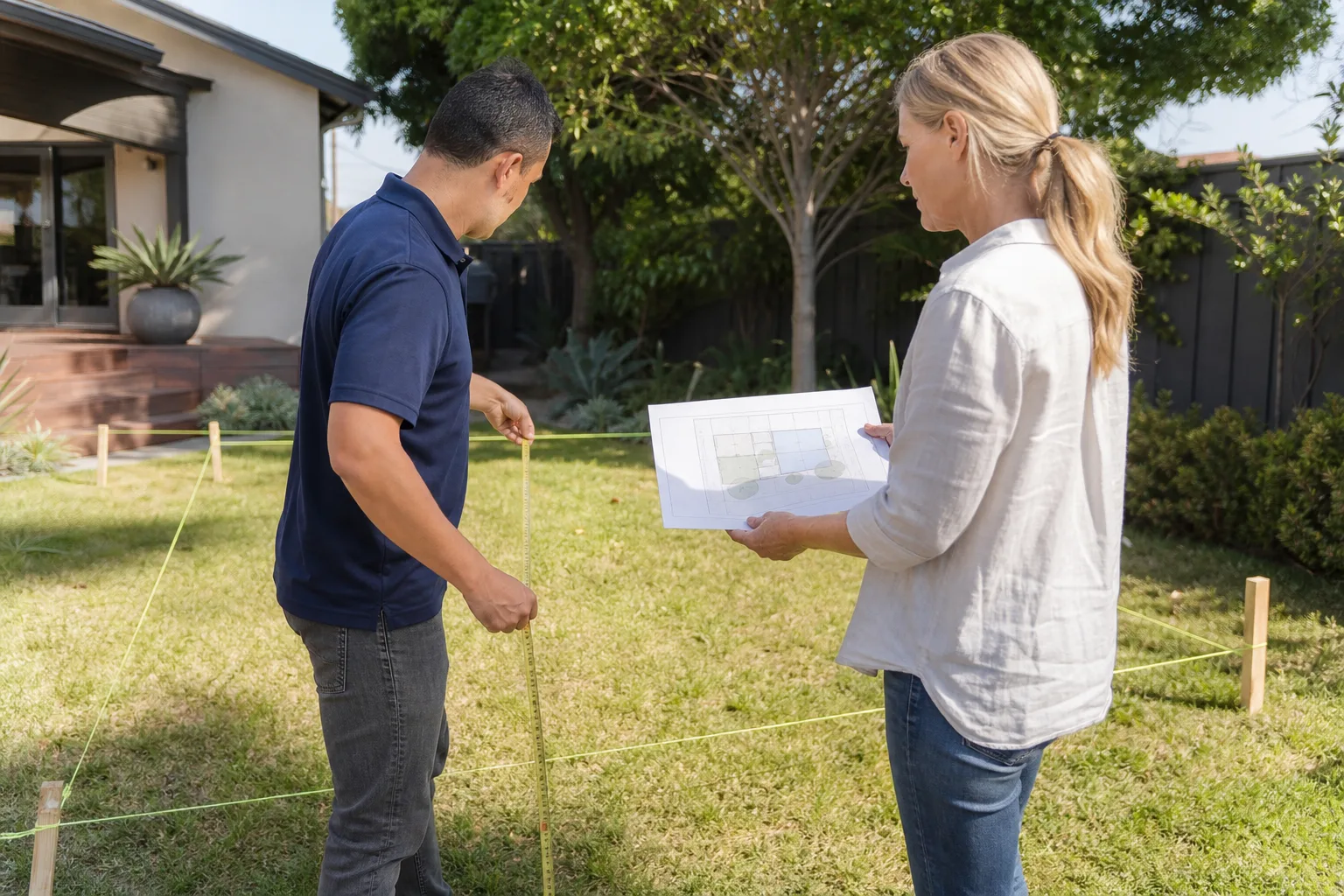
You should call an ADU contractor before you call an architect, before you call the city, and before you start sketching floor plans. The right contractor will walk your lot, look at your setbacks, check your utility access, and tell you what’s feasible before you spend a dime on design. That initial conversation costs nothing if the contractor offers free estimates. Garage conversion contractors in Houston can also tell you whether converting your existing garage is smarter than building new, which is often the case on tight lots in the Heights or Montrose. Lodgewick ADU Houston offers free estimates across the Houston area. Call (361) 326-2313 and we’ll walk your property, talk through your options, and give you a written price before anything else happens.
Frequently Asked Questions
Most ADU projects in Houston currently run between $180 and $350 per square foot for a stick-built unit, meaning a 600-square-foot ADU typically falls in the $110,000 to $210,000 range, with prefab options from companies like Abodu or Boxabl sometimes landing lower depending on site conditions. For a deeper look at pricing, see our ADU Cost Breakdown: The Houston Homeowner’s Reference for 2026. Site work, utility connections, and foundation costs can add $15,000 to $40,000 depending on your lot. Call (361) 326-2313 for an exact written quote, estimates are free.
Texas doesn’t require a statewide general contractor license, but the electricians, plumbers, and HVAC technicians working on your ADU each need state licenses through the TDLR, and the contractor pulling the permit needs to be registered with the city. Verify all licenses on the TDLR website before signing anything.
A stick-built ADU in Houston typically takes 4 to 7 months from permit to certificate of occupancy, while prefab units from manufacturers like Boxabl can move faster since much of the work happens in the factory. Weather and city inspection schedules are the biggest variables, so a written timeline with defined milestone dates is a must before you sign.
It shouldn’t, if you have a fixed-price contract and don’t make changes. Price changes come from change orders, which should each be written, priced, and signed before the work is done. Any contractor who changes the price at the door without a signed change order is violating the contract.
Yes, we pull all permits for every ADU project in Houston, and each inspection is passed before we ask for the associated payment milestone. A contractor who asks you to pull your own permits is avoiding accountability. You want the contractor’s name on the permit.
It’s the written guarantee behind every Lodgewick ADU Houston project: if the work isn’t done right, we come back and make it right within 365 days of completion, and that commitment is in writing on every contract before work begins. It covers the workmanship and materials we install, and it means a free return visit if something fails during the guarantee period.
The Bottom Line
Hiring an ADU contractor in Houston comes down to one thing: what’s in writing. The contractor worth hiring will give you a written price before work begins, show up in the window they promised, keep the site clean, put the guarantee in writing, and come back if the work fails. Everything else, years in business, portfolio polish, friendly handshakes, is secondary. Ask for the five commitments. Check the TDLR licenses. Tie your payments to completed milestones. If a contractor can’t put it all in writing, you’re not hiring a builder. You’re hiring a gamble. Lodgewick ADU Houston serves the full Houston area with a written price, a written guarantee, and a live person answering every call, 24/7. Call (361) 326-2313 to schedule your free estimate.
Written by Russ Delmar, Owner at Lodgewick ADU Houston, serving Houston since 2010.