James Hardie New Detached ADU: The Houston Owner’s Guide
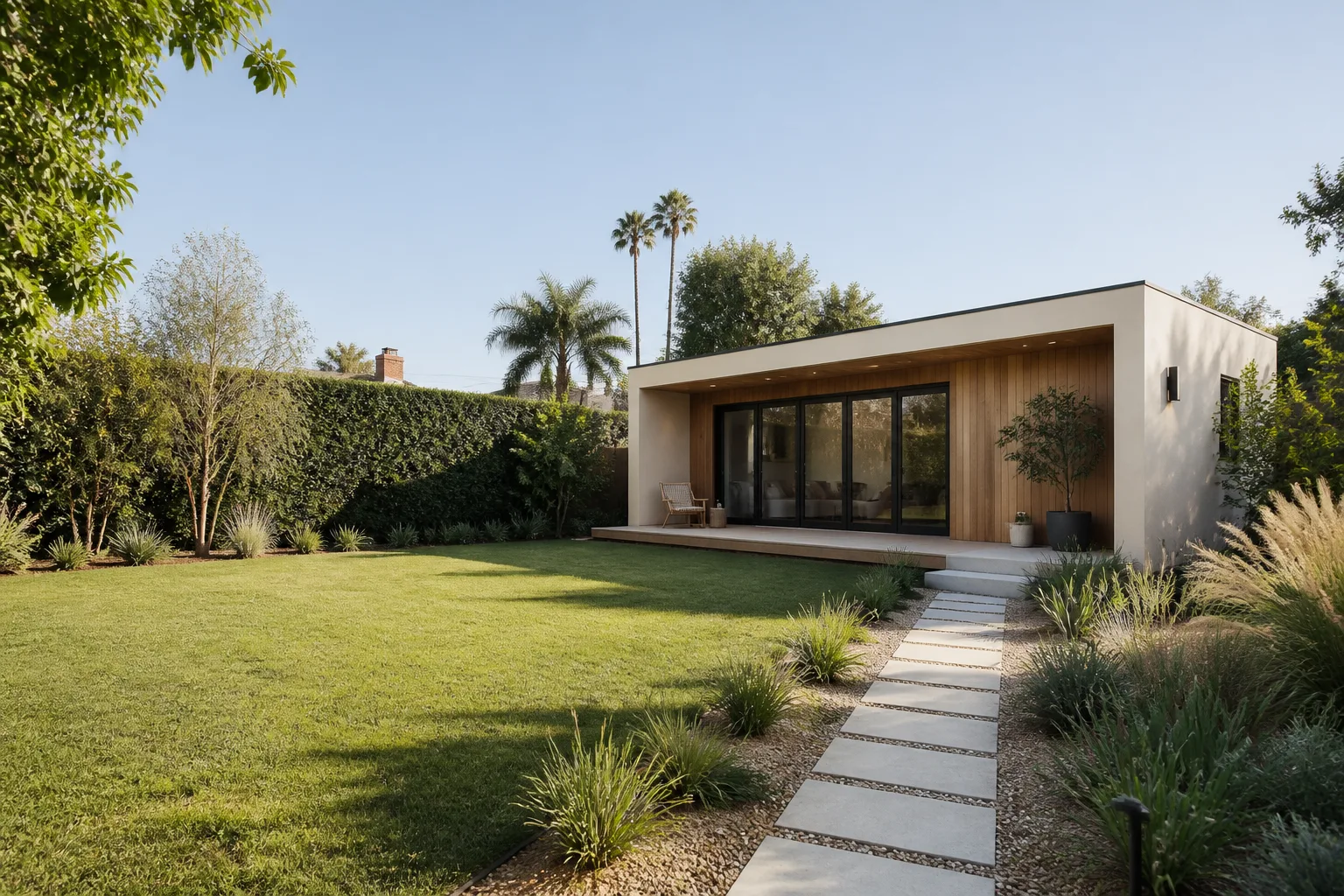
We install and finish James Hardie siding and trim on new detached ADUs (accessory dwelling units, meaning a second livable structure on your existing lot) throughout Houston, with typical installed siding packages running $14,000 to $28,000 depending on square footage, profile, and trim complexity. Most ready-to-build ADU shells we see from manufacturers like Abodu, Cover, and Dvele arrive with James Hardie specified but not installed, or installed incorrectly on the first pass. The usual call starts with a homeowner noticing gaps at corners, wavy lap lines, or moisture staining at the bottom course after a Houston gully-washer. Lodgewick ADU Houston is an independent builder and installer, not affiliated with James Hardie, but we work with their product line daily and keep common profiles and trim in local stock.
Which James Hardie Models This Applies To
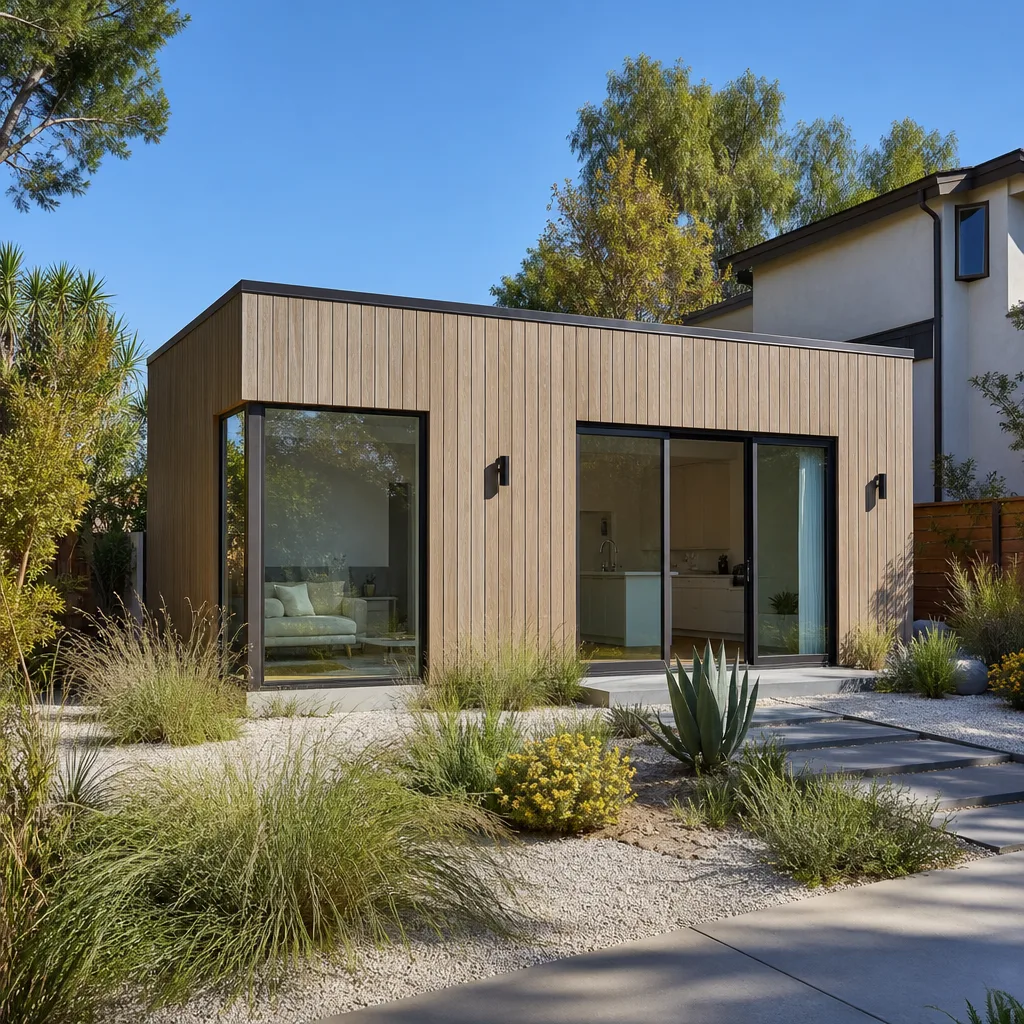
If your detached ADU plan calls for James Hardie, you’re almost certainly working with HardiePlank lap siding (5/16″ thick, available in 4″, 5″, 6″, 7″, and 8″ exposures), HardiePanel vertical siding (4’x8′, 4’x9′, or 4’x10′ sheets), or HardieTrim boards (5/4″ and 4/4″ thicknesses) at corners, windows, and door surrounds. The compatibility gotcha we see in Houston repeatedly: HardiePlank lap siding in a 6-1/4″ exposure is not interchangeable with the 5″ or 7″ exposure without changing your layout math and starter strip position, and mixing exposures on one wall reads as a mistake from the curb. For detached ADUs, most plans call for 4’x9′ HardiePanel vertical with battens, a HardiePlank lap, or a combination, with HardieTrim boards at every outside corner and around every opening. Board-and-batten is the most common spec we see from prefab manufacturers because it hides the 9-foot panel joints behind vertical battens.
OEM versus aftermarket matters less with James Hardie than with mechanical parts, because the siding itself is the product. The fasteners, flashing, and joint treatment are where quality diverges. Aftermarket flashing tapes and generic caulks fail faster against Hardie’s movement and Houston’s humidity than the flashing systems specified in the Hardie installation literature. We stock Hardie-branded or Hardie-equivalent flashing, 6d and 8d hot-dipped galvanized nails, and 30-year exterior-rated caulk on the truck. If you’re matching existing Hardie on a main house to a new ADU, the color match can be trickier than the profile match; ColorPlus factory finishes fade differently than field-painted boards, and 10-year-old ColorPlus on the main house won’t match fresh ColorPlus on the ADU wall perfectly.
Signs Your James Hardie New Detached ADU Is Failing
- Bottom course swelling or peeling at the first lap. This almost always traces back to insufficient clearance above grade or missing kick-out flashing at the roof-to-wall transition. Hardie requires 6″ clearance to dirt and 2″ to hardscape; in Houston’s clay soil, a slab that settles even an inch can close that gap and wick water into the cut edge.
- Wavy or buckled lap lines when the wall heats up. Hardie moves with temperature and humidity. If the installer butted boards tight instead of gapping them 1/8″ at joints and 1/4″ at corners, the boards transmit pressure and bow in the afternoon sun.
- Caulk cracking at window and door trim within the first year. The right sealant for Hardie in Houston is a high-quality, paintable exterior caulk rated for 30 years. Cheap painter’s caulk dries brittle, cracks in one Houston summer, and lets Gulf moisture behind the trim.
- Nail heads rusting through the face of the boards. Electrogalvanized nails don’t hold up to Hardie’s alkalinity and Houston humidity. You want hot-dipped galvanized or stainless, 1″ minimum embedment into framing. Rust streaks mean the wrong fasteners were used and the boards are pulling loose.
- Staining or soft sheathing behind the siding. By the time you see this, water has been getting in for a while. Hardie itself doesn’t rot, but the OSB or plywood behind it does, and Houston’s humidity accelerates the process. This is a tear-off-and-reseat job, not a caulk touch-up.
Replacement Cost & What’s Included
For a typical 600 to 800 square foot detached ADU in Houston, a full James Hardie siding job runs $14,000 to $28,000 installed. At the low end: HardiePanel board-and-batten with painted battens, minimal trim, and standard ColorPlus finish. At the high end: HardiePlank lap in a 4″ exposure with HardieTrim at every corner and opening, plus tear-off of failed siding, any rotten sheathing replacement, and repainting. For partial replacement, like re-siding one wall or replacing bottom courses, expect $1,800 to $6,000 depending on access and how much framing repair hides underneath. Every estimate from Lodgewick ADU Houston is a written line-item price, not a verbal guess. The price we write is the price you pay, and the work carries the 365-Day Done Right Promise: if it’s not right, we come back and make it right.
DIY or Call Us?
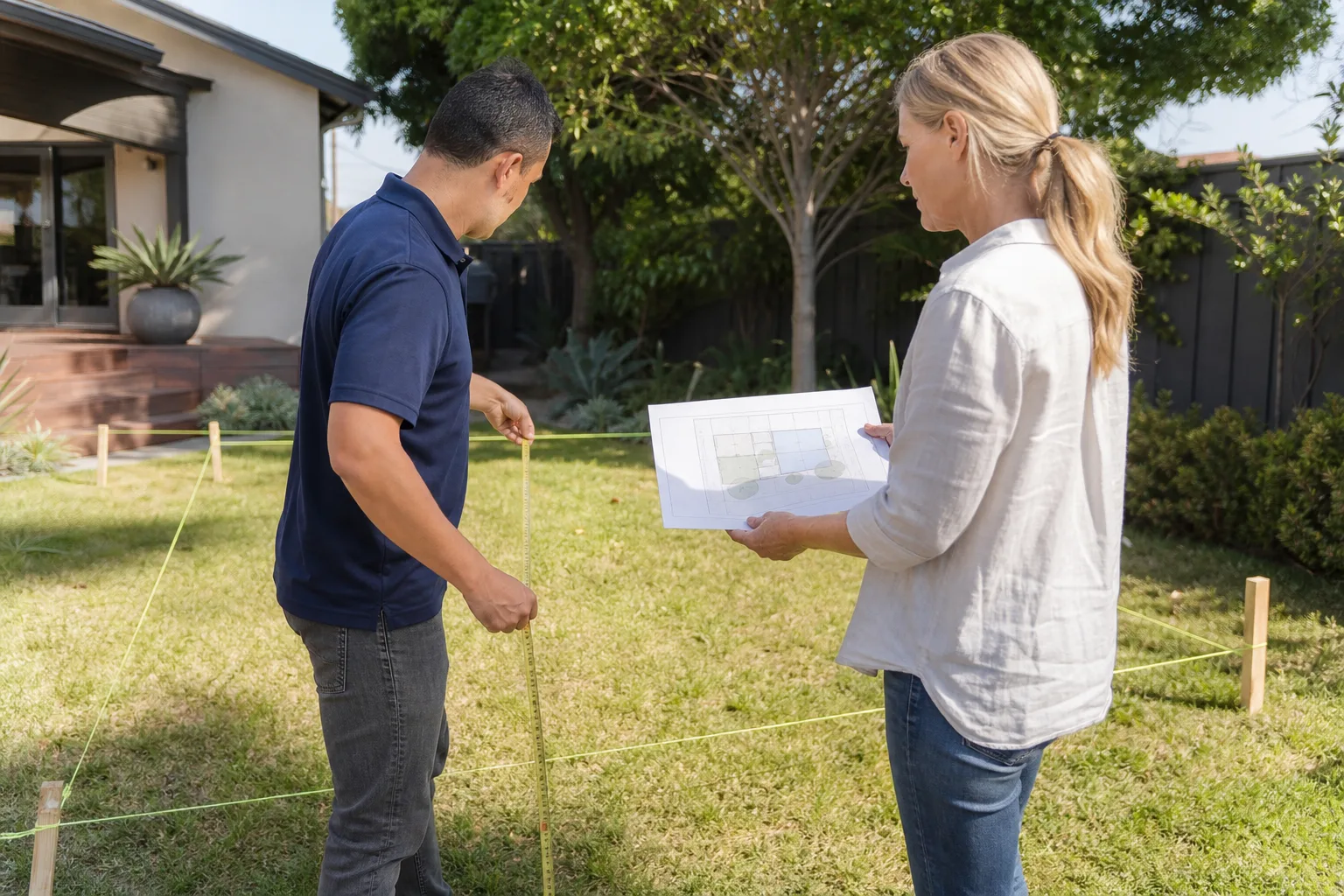
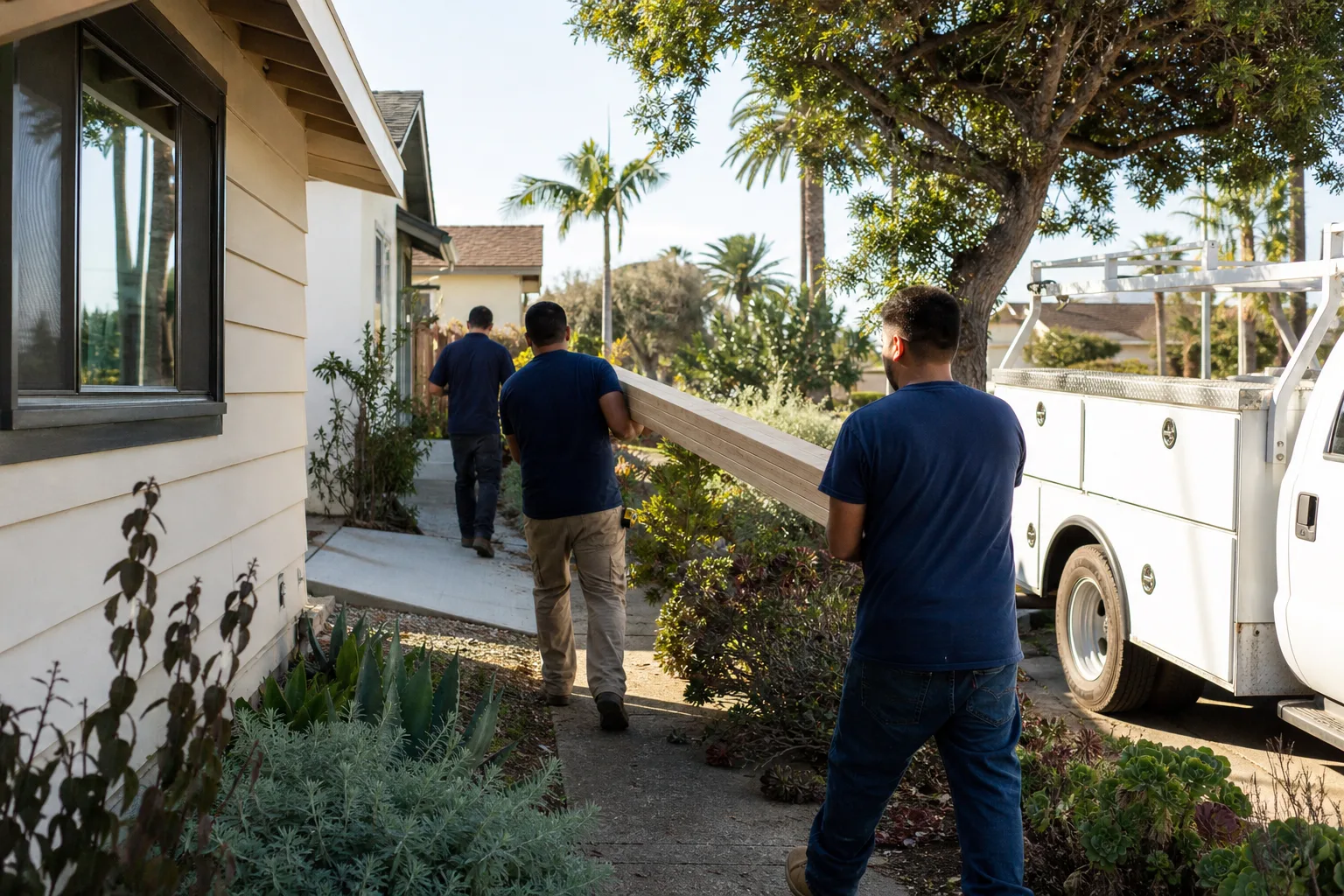
There are things worth checking on your own: walk the perimeter with a tape measure and confirm you have 6″ of clearance above soil, look for caulk pulling away at trim, and check that no sprinkler head is hitting the siding every morning. Those are the things that cause most Houston Hardie failures, and catching them early saves a full re-side. Where DIY goes wrong is full sheet or lap replacement. Hardie panels weigh 60 to 80 pounds each; cutting them needs a diamond blade and produces silica dust that requires proper respiratory protection; and hanging them level on a wall that’s moved with Houston clay settlement is a two-person job with a half-day of layout before the first nail. If you’re missing a flashing detail or gap spec, the new siding fails the same way the old one did, just a year later. If the bottom course is compromised or joints are opening, call us at (361) 326-2313. We will come look and tell you exactly what is wrong, even if the fix is one we would not charge for because it is a flashing adjustment, not a re-side.
FAQs
James Hardie fiber cement siding carries a 30-year limited product warranty, and properly installed boards in Houston routinely last 30 to 40 years before needing replacement, though paint surfaces typically need attention every 7 to 12 years depending on sun exposure. The siding itself is not the weak link; installation details and the paint system are what fail first. Call (361) 326-2313 if you’re seeing signs your Hardie is failing before year 15, because that’s usually an installation issue, not a product issue.
Yes, in many cases it can, particularly if the failure is at a single bottom course, one corner flashing detail, or a short run of boards on one wall. We do partial repairs starting around $1,800, and the written estimate tells you what is feasible versus what’s throwing good money after bad. If the problem is systemic, like wrong fasteners throughout or missing flashing at every opening, patching it is just buying time.
A full siding job on a typical detached ADU in Houston runs 5 to 10 working days, including tear-off, any sheathing work, housewrap or rain screen, siding, trim, and caulking. Partial repairs are usually 1 to 2 days. We give you a defined arrival window and a completion date in writing, and the schedule we set at start is the schedule we keep.
We keep common James Hardie profiles, trim boards, flashing, and fasteners stocked at our Houston yard and order project-specific ColorPlus colors from local suppliers, typically arriving in 3 to 5 business days. If you’re the kind of person who likes details, I’ll tell you exactly which profiles we have on the truck when you call.
Written by Russ Delmar, Owner, Lodgewick ADU Houston at Lodgewick ADU Houston, serving Houston and nearby areas.