James Hardie Junior ADU Conversion: The Houston Owner’s Guide
If you’re searching for a James Hardie junior ADU conversion in Houston, you’re likely dealing with a failed or failing Hardie panel system on a small accessory structure and need to know what it costs to make it right. We stock and install James Hardie-compatible siding, trim, and weather barrier components for junior ADU conversions (a junior ADU, or JADU, is a smaller attached or detached living unit built within or beside an existing home, typically 500 square feet or less), with typical installed replacement costs in Houston running $1,400 to $4,800 depending on the extent of the failure. Most Houston homeowners discover the problem the same way: a soft spot near the bottom edge of the panel, paint that won’t stay put, or water staining on the interior drywall after a hard Gulf rain.
What makes this page different is that we’ll tell you exactly what’s failing, what it costs to fix in Houston’s climate, and when it makes sense to call us at (361) 326-2313 rather than wrestle with it yourself. Russ Delmar has walked enough Houston JADU sites to know that James Hardie failures here are rarely about the product itself. They’re usually about installation details that got skipped, and we’ll show you what to look for.
Which James Hardie Models This Applies To
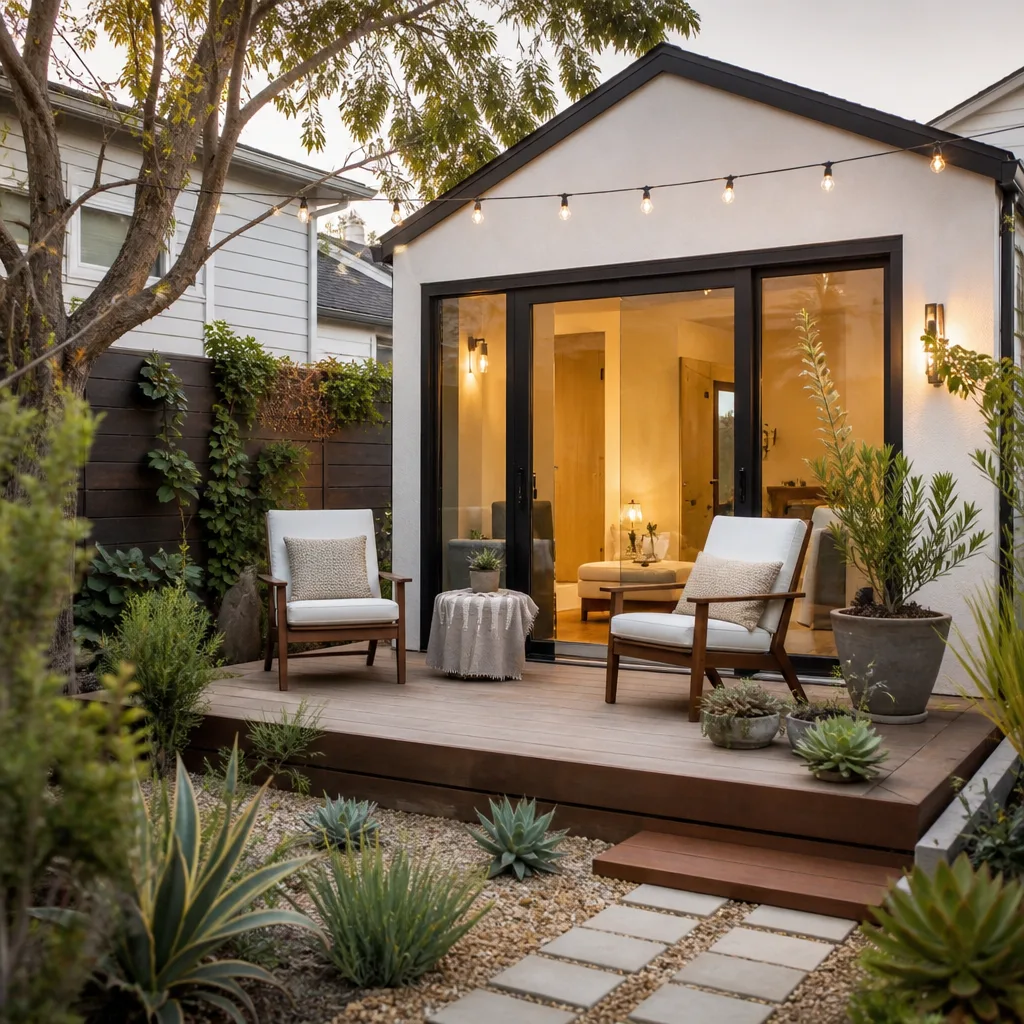
Junior ADU conversions in Houston typically use one of three James Hardie product lines: HardiePlank lap siding (the most common, in 5/16-inch or 7/16-inch thickness), HardiePanel vertical siding (often 4×8 or 4×10 sheets), or HardieTrim boards around windows and corner transitions. The failure point we see most often on Houston JADUs is HardiePanel vertical siding, because panels trap water behind them more easily than lap siding when the flashing or the gap at the bottom edge isn’t done right.
How to confirm what you have: look at the back of a loose or damaged piece, or check the nail heads. HardiePlank is marked with a printed mill certification on the back face, usually including the thickness code and the plant location. HardiePanel has the stamp on the long edge. The key compatibility gotcha that trips up owners: James Hardie products require a minimum 6-inch clearance between the bottom edge of the siding and grade, plus a Z-flashing or drip edge detail at horizontal joints. If your Houston installer set the panels down into soil or concrete contact, moisture wicking is guaranteed eventually. That’s not a product defect, it’s a detail, and it’s the first thing we check on every JADU we assess.
For OEM versus aftermarket: for structural panels and trim, we always recommend genuine James Hardie product. The fiber cement formulation and edge profile are designed to work together, and mixing a bargain aftermarket panel with genuine trim creates uneven expansion across temperature swings, which Houston has been getting a lot more of. Some aftermarket flashing and weather barrier products are fine, but the panel itself is worth staying OEM. As an independent Houston contractor, we’re not affiliated with James Hardie. We just install and repair their products because we’ve verified them in Gulf Coast conditions for years.
Signs Your James Hardie Junior ADU Conversion Is Failing
- Efflorescence (white chalky residue) on panel faces. Water is getting behind the panel and wicking through the fiber cement, then drying on the surface and leaving mineral salts behind. In Houston’s humidity, this usually means a flashing failure somewhere uphill from the stain.
- Paint or caulk peeling within 12 to 18 months of application. Fiber cement is dimensionally stable, so paint doesn’t peel from normal movement. When it does, water has saturated the panel from behind and is pushing the coating off from the inside.
- Soft spots or crumbling along panel edges and nail lines. This is the late-stage version of the same story. Fiber cement doesn’t rot the way wood does, but prolonged saturation breaks down the cement binder, and the panel starts to crumble at stress points.
- Gaps opening at butt joints and corner trim. Houston’s clay soil expands and contracts dramatically with moisture, and a JADU that was framed tight will move. If the original installer didn’t leave the specified 1/8-inch gap at butt joints and float the trim over it, the panels will bind and crack or push out at the corners.
- Water staining on interior drywall or a musty smell inside the JADU. By the time you see this, the failure is moving inward. The exterior cladding has already lost its seal, and the wall cavity is holding moisture. In Houston’s humid months, this turns into a mold and indoor air quality issue fast.
Replacement Cost & What’s Included
For Houston junior ADU conversions, expect a partial panel replacement with proper flashing correction to run $1,400 to $3,200 installed. A full re-siding of a typical 400 to 500 square foot JADU with HardiePlank runs $4,200 to $8,400 depending on height, access, trim work, and whether we’re pulling and replacing weather barrier. A trim-only correction around windows and corners typically runs $900 to $2,600.
Every quote we write for Houston includes materials, labor, flashing correction, disposal, primer and paint on the repaired area, and a written line-by-line breakdown before we touch the building. We don’t change the price at the door. The 365-Day Done Right Promise applies to every JADU repair we do: if the fix doesn’t hold, we come back and make it right, free, within the guarantee period.
| Repair Scope | Houston Price Range (Installed) |
|---|---|
| Partial panel replacement + flashing correction | $1,400 – $3,200 |
| Full JADU re-side with HardiePlank | $4,200 – $8,400 |
| Trim and corner correction only | $900 – $2,600 |
| Weather barrier replacement (whole JADU) | $2,800 – $5,200 |
These are installed ranges, not just part prices. Fiber cement is heavy, the Houston sun makes roof-at-height work unpleasant for everyone, and proper flashing work is slow. You’re paying for the detail, not just the panel.
DIY or Call Us?
There are things you can safely check yourself, and things you shouldn’t touch. You can absolutely inspect the bottom edge clearance on your JADU, look for cracked or missing caulk at joints, and take photos of any efflorescence you find. That’s useful, and it helps you have a real conversation with whoever you hire.
What you shouldn’t DIY: pulling fiber cement panels. James Hardie panels are heavy, brittle under pressure, and generate silica dust when cut or broken. Cutting them without proper respiratory protection is a genuine health hazard, and dropping a full sheet off a ladder is how people get hurt. If the repair involves anything above head height, let a pro handle it. Tell me what you need the space to do, and I’ll tell you exactly what it takes to get there. Call (361) 326-2313 and we’ll walk through what you’re seeing before we ever schedule a visit.
FAQs
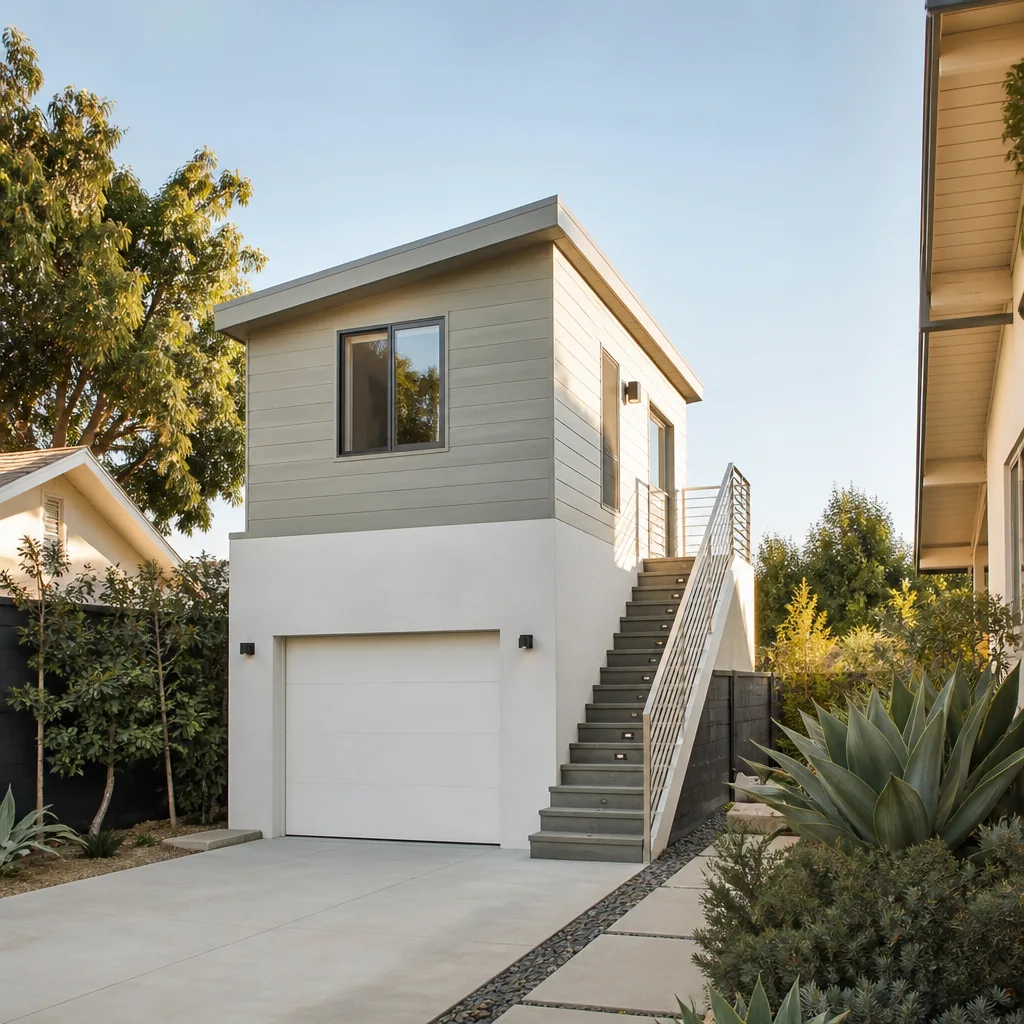
When installed with correct flashing and the proper 6-inch ground clearance, a James Hardie-clad JADU should hold up for 30 to 50 years in Houston before any panel replacement is needed. What fails in Houston much faster than the panels is the flashing and the paint, which is why we emphasize the detail work over the material itself.
For small edge crumbles or hairline cracks, yes, we can seal and paint over the damage if the panel is still structurally sound. If the panel is soft to the touch, water-taked, or crumbling at the nail line, it needs replacement, not patching. Call (361) 326-2313 and describe what you’re seeing, or text us a photo, and we’ll give you a straight answer.
Most partial panel replacements and flashing corrections on a junior ADU take one to two working days. A full re-side of a 500-square-foot JADU typically runs three to five days depending on weather and trim complexity. We give you a written schedule before work starts, and we show up in the window we put on paper.
We carry common HardiePlank, HardiePanel, and HardieTrim sizes on our trucks for Houston jobs, along with the flashing and weather barrier products we install alongside them. If your job needs a less common profile or color, we order it from local suppliers and typically have it in hand within a few days.
Written by Russ Delmar, Owner, Lodgewick ADU Houston at Lodgewick ADU Houston, serving Houston and nearby areas.