Last updated October 15, 2026
DIY vs Professional ADU: The Houston Homeowner’s Decision Guide
A Houston homeowner spent $28,000 and 18 months converting his detached garage into an apartment. He did the framing, ran the electrical, plumbed a bathroom, and hung drywall himself. When he tried to sell the house two years later, the buyer’s lender flagged the unpermitted work. The sale collapsed. Bringing the structure up to code cost him $41,000 more than the original build. This guide exists so you don’t become that story. We’ll walk through what Houston law actually allows you to build yourself, what it doesn’t, where the real financial risks hide, and how to structure a project that won’t haunt you at closing. This is the practical decision guide for homeowners weighing a DIY ADU against hiring a professional in Houston.
Quick Answer
For most Houston homeowners, the smartest path is a hybrid one: hire a licensed professional for permitted work (electrical, plumbing, HVAC, structural changes) and handle finish work yourself if you have the skill and patience. Unpermitted DIY ADU work routinely creates problems with resale, title insurance, and rental legality that cost far more to fix than hiring correctly from the start. The decision isn’t really about whether you can do the work. It’s about whether the work will be legal, financeable, and sellable when you need it to be.
Table of Contents
- What Texas Law Actually Lets You DIY
- The Hidden Cost of Unpermitted Work: Resale, Title, and Rental Risk
- Where Skilled Homeowners Can Legitimately Add Value
- Houston Climate Mistakes That Cost Thousands to Fix
- How to Structure a Hybrid DIY-Contractor Project
- What a Houston ADU Actually Costs: DIY vs Professional
- How Financing Changes the DIY Equation
- Common Mistakes to Avoid
- When to Call a Professional
- Frequently Asked Questions
What Texas Law Actually Lets You DIY
Texas is not a state that requires a general contractor’s license for most residential work. That surprises a lot of Houston homeowners and it should. But the freedom cuts in a specific direction. You can legally perform many types of work on your own property as a homeowner, including framing, drywall, painting, flooring, and general carpentry. What you cannot legally do yourself without appropriate licensing are trades regulated at the state level: electrical work, plumbing, and HVAC installation.
Houston sits inside a city with its own permitting authority. The City of Houston requires permits for accessory dwelling units, and those permits include plan review. The crucial detail most DIYers miss is that permit applications for ADU work require a licensed professional’s signature on the mechanical, electrical, and plumbing drawings when those systems are involved. You can’t just “do the electrical yourself and get it inspected later.” The inspection process itself requires the work to have been performed by someone with the appropriate state license.
Here’s what that means in plain terms:
- Electrical: Texas requires a state electrical license (issued through TDLR) for any electrical installation beyond the most trivial homeowner tasks like swapping a light switch. Running new circuits, installing a subpanel, or wiring a mini-split system? You need a licensed electrician.
- Plumbing: The Texas State Board of Plumbing Examiners requires a plumbing license for any fixture installation, drain line work, or water line modifications. A homeowner can replace a faucet washer. Running a new sewer line for an ADU bathroom is a different universe.
- HVAC: Installing or modifying refrigerant-based air conditioning requires an EPA Section 608 certification and TDLR air conditioning contractor license. Houston’s climate makes HVAC non-optional in an ADU, and that work is legally off-limits for DIY.
- Structural: Houston’s permitting process requires engineered drawings for foundation work, roof modification, and load-bearing wall removal. You can draft a floor plan. You cannot stamp your own foundation design.
In our experience at Lodgewick ADU Houston, the homeowners who get hurt the most are the ones who assume “Texas is a free state” means no rules at all. Texas is free in a narrow way. The three trades above are where the state draws a hard line, and skipping them is where the financial disasters start. A skilled DIYer can absolutely frame walls and hang cabinets. They cannot pull a permit that depends on a licensed signature for systems they don’t have a license to install.
The Hidden Cost of Unpermitted Work: Resale, Title, and Rental Risk
Here’s the financial case most Houston homeowners never hear: unpermitted ADU work doesn’t just create a risk of fines. It creates a chain of problems that compounds at the exact moment you want the property to perform for you: when you sell it, refinance it, or rent it.
Let’s walk through each one.
Resale. When you sell a home in Houston, the seller’s disclosure notice asks directly whether any work was performed without required permits. You have to answer truthfully. Once disclosed, the buyer’s lender often will not underwrite a property with unpermitted living space. Appraisers may exclude the unpermitted ADU from the square footage altogether, meaning you don’t get credit for the asset you built. In the worst case, which we’ve seen more than once, the lender requires the unpermitted work to be demolished or brought up to code before closing, and the cost lands on the seller.
Title insurance. Unpermitted work can surface as a title defect. If a buyer discovers unpermitted work after closing, they may file a claim against the title policy. Title companies increasingly include exclusions for unpermitted structures, which means the buyer’s coverage is compromised and the seller may face liability. Some Houston title companies now require a certificate of occupancy or a finalized permit history before they’ll issue a clean policy on a property with an ADU.
Rental legality. If you plan to rent the ADU on Airbnb, VRBO, or a long-term lease, Houston requires the unit to be permitted and to pass inspection. Operating an unpermitted rental creates exposure to code enforcement complaints, and neighbors in Houston do report unpermitted units. If a tenant is injured or there’s a fire in an unpermitted unit, your homeowner’s insurance will likely deny the claim. That’s not a hypothetical risk. That’s a documented claim pattern.
The number that sticks with most people is this: bringing an unpermitted DIY ADU up to code usually costs more than building it correctly the first time, because walls have to be opened, wiring re-run, and sometimes the structure must be partially dismantled for inspection. A DIYer who saves $15,000 on unpermitted work and later pays $35,000 for remediation has not saved money. They’ve paid tuition.
Where Skilled Homeowners Can Legitimately Add Value
None of this means you can’t participate in your own ADU project. You absolutely can. The key is knowing exactly which parts of the project carry regulatory risk and which parts don’t.
Here are the areas where a capable homeowner adds genuine value without touching a permitted scope:
- Demolition and site prep. Tearing out old carpet, removing non-load-bearing walls (with structural confirmation), clearing the build area, and hauling debris are all DIY-friendly. You’re doing manual labor, not creating safety risk.
- Finish carpentry. Baseboards, crown molding, interior door installation, closet shelving, and cabinet assembly are all areas where attention to detail matters more than licensure. A careful DIYer can do this work as well as any crew.
- Painting. Interior and exterior painting requires no permit and no license. It’s the single most common DIY task that yields professional-looking results when done carefully.
- Flooring. Laminate, vinyl plank, and engineered wood flooring installation are DIY-accessible. Tile is harder but doable with patience.
- Landscaping and exterior finish. Grading around the foundation (within code requirements), planting, pathway installation, and fence staining are all outside the permit scope.
- Interior trim and hardware. Door handles, light fixtures (mounted to existing boxes, not new wiring), faucet handles, and cabinet pulls don’t require licensed trades.
- Project management. You can coordinate schedules, source materials, manage deliveries, and keep the job site organized without performing licensed work yourself.
The discipline to maintain is this: everything upstream of drywall (foundation, framing, rough plumbing, rough electrical, HVAC runs, insulation inspections) stays with licensed professionals. Everything downstream of drywall (trim, paint, flooring, fixtures) is yours to claim if you want it. That’s where the savings live and where the risk is zero.
Houston Climate Mistakes That Cost Thousands to Fix
Houston’s climate is the silent variable in every ADU project. The city gets roughly 49 inches of rain a year, humidity runs above 80% for much of the summer, and the soil is expansive clay that shifts seasonally. A DIYer who builds an ADU using generic online guidance from a dry-climate state is importing mistakes Houston will charge for later; for local guidance, see our Seasonal ADU Care for Houston: Year-Round Homeowner’s Guide.
Here’s where the errors show up, with real remediation costs:
Vapor barrier mistakes. In humid Houston, an improperly installed vapor barrier traps moisture inside wall cavities instead of blocking it. Within two to three years you get mold behind the drywall, and that’s not a cosmetic problem. Mold remediation in a small ADU typically runs $3,000 to $8,000 in Houston, and that’s before you fix the vapor barrier itself. The fix usually requires opening the walls, which means redoing the drywall, paint, and trim you already paid for. In our work at Lodgewick’s Houston garage conversion practice, we see vapor barrier mistakes more than any other single DIY failure.
Flashing errors. Houston rain doesn’t fall gently. It comes in sheets and it comes sideways during summer thunderstorms. Improperly flashed roof intersections, window openings, and door thresholds will leak within the first heavy storm cycle. By the time you see the water stain inside, the structural damage is already underway. Re-flashing a small roof-to-wall intersection correctly costs $800 to $2,000. Repairing rotted rafters and sheathing from the leaked water costs $6,000 to $15,000. Doing it right the first time is the cheapest option every time.
Foundation and drainage issues. Houston’s expansive clay soil expands when wet and contracts when dry. An ADU foundation needs proper drainage and soil preparation or it will shift. A visible crack appears, then a sticking door, then a window that won’t close. Foundation repair on an ADU in Houston typically starts around $8,000 and goes up depending on how much movement has occurred. Proper site drainage installed during construction costs $1,500 to $4,000.
HVAC undersizing. Houston summers are brutal, and an ADU without properly sized air conditioning is unusable from June through September. A DIYer who installs a window unit in a 400-square-foot ADU will discover the unit can’t keep the space below 80 degrees on a 98-degree day with 80% humidity. A proper mini-split system costs $3,500 to $7,000 installed by a licensed Houston HVAC contractor. It’s a hard cost, but it’s also the single biggest determinant of whether the ADU is actually livable for most of the year.
How to Structure a Hybrid DIY-Contractor Project
If you’ve read this far, you’re probably thinking about a hybrid approach: contractor for the licensed work, you for the finish work. That’s the most financially rational path for a handy homeowner, and it’s exactly the structure we recommend when the homeowner asks.
Here’s how to structure it so the project doesn’t unravel:
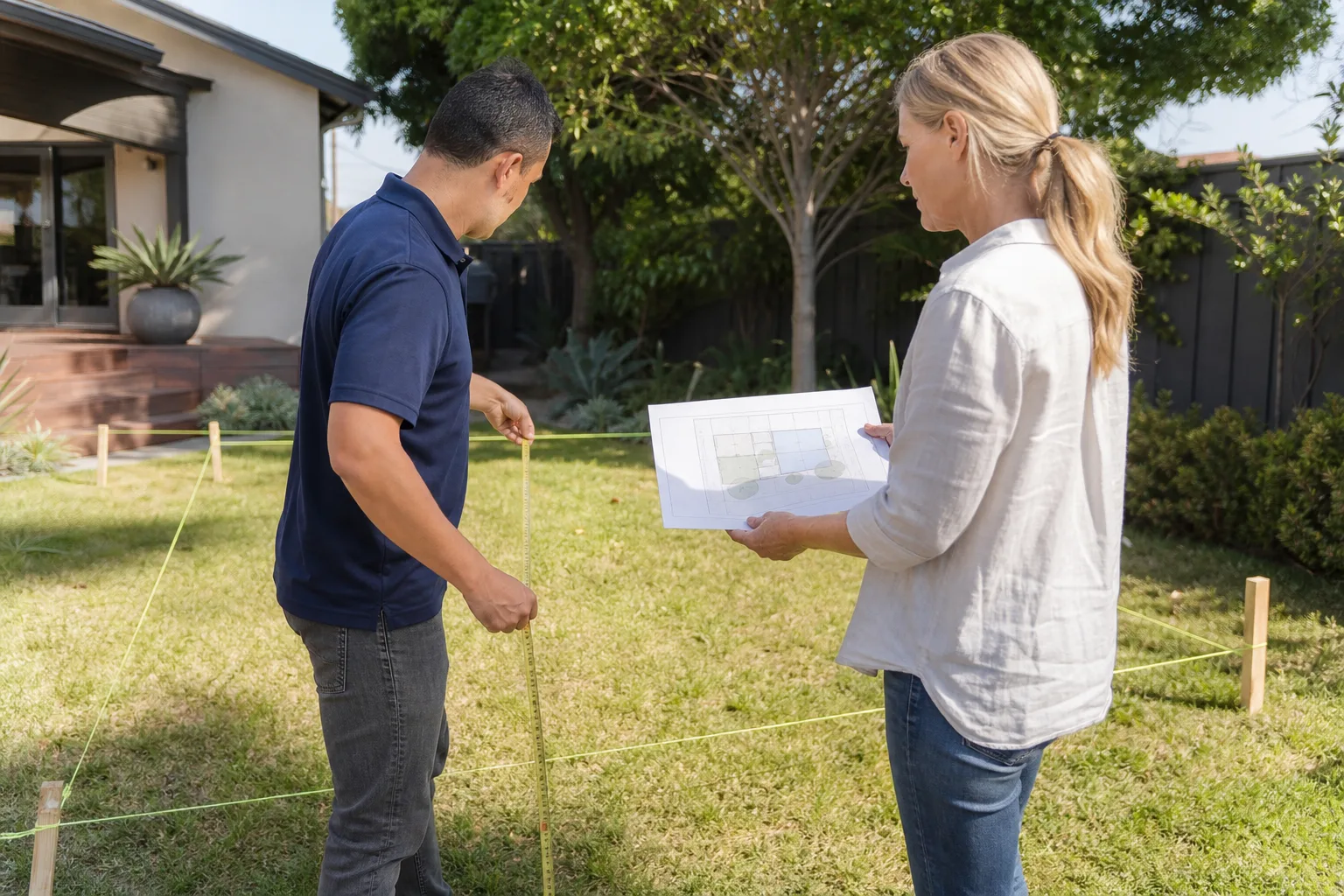
- Define the scope split in writing before any work starts. Write a one-page document that lists every task in the project and assigns each task to either “Contractor” or “Homeowner.” Get the contractor to sign it. This prevents the single most common failure of hybrid projects: the contractor assumes you’re doing something, you assume they’re doing it, and the task sits undone for three weeks while drywall waits to be hung.
- Sequence the work so your tasks follow theirs. Contractor frames, roughs-in electrical, plumbing, and HVAC, passes inspection, insulates, and hangs drywall. Then you paint, install flooring, hang trim, and do finish carpentry. Never insert your tasks into the middle of their sequence. Drywall needs to hang before you paint, but insulation needs inspection before drywall hangs. The sequence is not negotiable.
- Confirm the permit inspection milestones. A Houston ADU permit involves multiple inspection points: foundation, framing, rough electrical, rough plumbing, and final. Make sure the contractor knows you want to be present at each inspection, and confirm that your finish work won’t affect any final inspection requirements. Some jurisdictions require the final inspection to happen before finish work is complete. Some after. Confirm this detail early.
- Set a realistic timeline for your own work. The number one cause of hybrid project failure is the homeowner’s timeline. You may think you can paint the interior in one weekend. You probably can’t. Build in buffer time and communicate it honestly with the contractor. If you’re still painting when the contractor returns for punch-list items, the project drags and frustration mounts.
- Keep receipts for everything. If you ever sell the home, you want a paper trail showing which parts of the project were professionally permitted and which parts were cosmetic homeowner work. Buyers and their lenders respond to documentation. Keep the contractor’s permit records, invoices, and photos of your finish work.
When structured this way, a hybrid project can save a Houston homeowner $20,000 to $40,000 on a standard ADU build while keeping every permitted system in licensed hands. That’s real money. It’s also the difference between a property you can sell and rent freely, and one that comes with a disclosure liability.
What a Houston ADU Actually Costs: DIY vs Professional
Let’s put concrete numbers on this. A standard 400-square-foot ADU in Houston, built to code with permitted electrical, plumbing, and HVAC, costs between $220 and $350 per square foot professionally built, depending on finishes and site conditions. That puts a full professional build in the $88,000 to $140,000 range for a basic unit. A garage conversion falls in a similar range per square foot because of the retrofit complexity.
A purely DIY approach, where you do everything yourself and hire unlicensed helpers, can appear to cost $60,000 to $90,000 for the same size unit. The gap looks like pure savings. Here’s what that gap actually represents in the Houston market:
- Permit exposure: The permitted professional build includes inspection compliance. The unpermitted DIY build creates risk exposure at resale, which typically forces a discount of 5% to 10% of the home’s value or the cost of remediation. On a $450,000 Houston home, that’s $22,500 to $45,000.
- Re-work risk: The National Association of Home Builders estimates that 10% to 15% of DIY work is redone by the homeowner. The re-work rate on complex trade work is significantly higher. In Houston’s humid climate, the vapor barrier and flashing failure rates push that number up.
- Financing cost: Unpermitted work rarely qualifies for home equity financing, meaning you’re funding it from savings or high-interest consumer credit. A professional build typically qualifies for a construction loan, HELOC, or ADU-specific financing product.
- Insurance gap: A professionally permitted ADU is covered by your homeowner’s policy when properly disclosed. An unpermitted unit may not be. If a fire starts in that unit, the claim denial alone could exceed any construction savings.
A hybrid approach typically lands in the middle: you hire a Houston home addition contractor for the licensed and permitted scope, then do $15,000 to $30,000 worth of finish work yourself. The professional scope runs $60,000 to $95,000, and your DIY labor covers flooring, paint, trim, and site prep. Your total out-of-pocket lands around $70,000 to $105,000 with every permit pulled and every licensed system done right.
The professional-only approach costs more up front and gets done fastest. The hybrid approach saves money on finish work and stretches your timeline. The purely DIY approach looks cheapest on paper and is the most expensive option by the time the property changes hands or the unit goes into service as a rental.
How Financing Changes the DIY Equation
If you’re paying cash from savings, the DIY-versus-professional decision is a personal risk calculation. If you’re borrowing money, the decision is often made for you.
Here’s what Houston homeowners need to know about financing an ADU:
Lenders require permits. No mortgage lender, construction lender, or HELOC provider will lend against unpermitted work. The loan officer’s first request is the permit history. If you built the ADU yourself without permits, that equity is invisible to lenders. A professionally permitted ADU adds borrowing power; an unpermitted one removes it.
Construction loans are structured around licensed contractors. If you’re using a construction loan to build an ADU, the bank typically requires a licensed general contractor (or a licensed trade for each permitted scope) to draw funds against inspection milestones. You cannot generally act as your own general contractor on bank-financed construction in Houston unless you are a licensed builder.
FHA and Fannie Mae ADU rules are tightening. Both FHA and Fannie Mae have updated ADU guidelines in recent years, and both require the ADU to be legal, permitted, and compliant with local zoning. An unpermitted ADU makes the entire property ineligible for FHA and conforming loans, which shrinks your buyer pool at resale and reduces what your home can command.
We’ve worked with homeowners in Houston’s Meyerland, Garden Oaks, and Sharpstown neighborhoods who discovered this financing reality mid-project. A homeowner built an ADU with cash, skipped permits, and then found they couldn’t refinance to pull equity out for the main house renovation they’d planned. The bank simply wouldn’t count the ADU as value. They hired Lodgewick’s ADU team in Houston to bring the unit up to code and restore the permit record before the refinance could move forward. It cost more than doing it right the first time and it delayed the refinance by four months.
The financing case is straightforward: if you ever plan to borrow against the property, sell the property to a financed buyer, or use the ADU as rental income on a mortgage application, the ADU must be permitted. There is no workaround.
Common Mistakes to Avoid
- Assuming “Texas is a free state” means no rules. Texas has fewer licensing requirements than some states, but electrical, plumbing, and HVAC work on an ADU are still legally restricted to licensed professionals in Houston. Skipping that distinction creates the most expensive mistakes.
- Building first, permitting never. The temptation to build the ADU and “deal with permits later” is strong. It’s also the single most expensive decision a Houston homeowner can make, because code retrofits cost more than code-compliant construction.
- Ignoring the vapor barrier. Houston’s humidity makes the vapor barrier a structural requirement, not a nice-to-have. A DIYer who follows a YouTube tutorial from Arizona has already made a mistake before the drywall goes up.
- Underestimating the cost of finishing. Rough framing and shell construction feel cheap. It’s the plumbing, electrical, HVAC, insulation, drywall, flooring, and finishes that add up. Most DIY budgets cover the shell and then run dry before the unit is livable.
- Skipping the structural confirmation for wall removal. In a garage conversion, removing a wall without confirming it’s non-load-bearing or properly transferring the load is a safety failure that can crack the roof line. If you’re not sure, get an engineer to look at it.
- Doing the HVAC yourself. Houston’s climate makes air conditioning a health and habitability issue, not a comfort feature. Installing refrigerant lines without an EPA certification is illegal and can create a safety hazard if the lines leak.
- Failing to build a written scope split for hybrid projects. Verbal agreements about who does what fall apart under time pressure. Write it down. Get it signed. It protects both parties and keeps the project moving.
When to Call a Professional
You should call a professional the moment your project touches any of these: electrical wiring, plumbing drain or supply lines, HVAC installation, foundation work, roof modifications, or load-bearing wall removal. You should also call a professional if the project needs financing, if you plan to rent the ADU, or if you expect to sell the home within ten years. The professional route costs more up front, but it’s the only route that protects the value you’re trying to create. Lodgewick ADU Houston offers free estimates in Houston. Call (361) 326-2313 and we’ll give you a written price before any work starts. No exceptions. That’s how we’ve operated in Houston since 2010, and it’s the only way we know to do it.
If the project involves demolition, trenching, roof work, or foundation work, get a professional involved. These are the tasks where a mistake isn’t just costly, it’s dangerous. The goal isn’t to scare you off. It’s to make sure the structure you build is one you can safely live in, rent, and sell.
Frequently Asked Questions
Yes, with a major caveat: you can legally perform general construction work (framing, drywall, finish carpentry, painting) on your own property in Houston without a contractor’s license, but the electrical, plumbing, and HVAC portions of the work must be completed by state-licensed professionals if the ADU will be permitted. The permit application for an ADU in Houston requires licensed signatures on the mechanical, electrical, and plumbing drawings. Attempting those trades yourself without a license means you’re either building unpermitted (and creating the resale and financing problems described above) or you’re hiring someone to do it anyway. The honest answer is that a purely DIY ADU in Houston is not a legal or prudent path for most homeowners.
You’ll face three compounding problems: you must disclose the unpermitted work on the seller’s disclosure notice, the buyer’s lender will likely refuse to finance a property with unpermitted living space, and the appraiser will likely exclude the unpermitted square footage from the valuation. Some sales do close with unpermitted work disclosed, but at a discount that typically wipes out whatever you saved by skipping the permits in the first place. You may also face a legal claim from the buyer if the work is later discovered to be unsafe or non-compliant. In our experience at Lodgewick ADU Houston, bringing an unpermitted ADU up to code usually costs more than building it correctly from the start.
A professionally built, code-compliant 400-square-foot ADU in Houston costs between $88,000 and $140,000, or $220 to $350 per square foot, depending on finishes, site conditions, and whether you’re building new or converting a garage. This assumes permitted electrical, plumbing, and HVAC work. A garage conversion typically falls in the same per-square-foot range because retrofit work adds complexity. Smaller units (300 square feet) can come in slightly under per square foot due to fixed-cost amortization, but not dramatically. For an exact written price, call (361) 326-2313 and we’ll prepare a line-item estimate.
On paper, yes, by $20,000 to $40,000. In practice, usually no. The savings disappear when you factor in re-work on climate-specific details, higher financing costs (unpermitted work doesn’t qualify for favorable lending), lower resale value, and insurance gaps. A hybrid approach where you do finish work and hire professionals for licensed trades saves money without the risk exposure. The purely DIY approach tends to be the most expensive option over the life of the property.
You can do demolition, site prep, finish carpentry, painting, flooring (laminate and vinyl), interior trim, hardware installation, and landscaping without a license or permit in Houston. These tasks sit downstream of the permitted scope and do not affect the structure’s safety or legal status. You should not attempt electrical work, plumbing, HVAC installation, foundation work, roof modifications, or load-bearing wall changes. If you do, you risk creating an unpermitted unit that can’t be financed, rented, or sold at full value.
Yes, and this is the most financially rational approach for a handy Houston homeowner. The typical structure: a licensed contractor handles foundation, framing, rough electrical, rough plumbing, HVAC, insulation, and drywall, plus all permit inspections. Then you do painting, flooring, trim, interior doors, and finish hardware. The key is to document the scope split in writing before work starts and to sequence your work after theirs. This structure typically saves $15,000 to $30,000 on a 400-square-foot ADU while keeping all permitted systems in licensed hands.
The Bottom Line
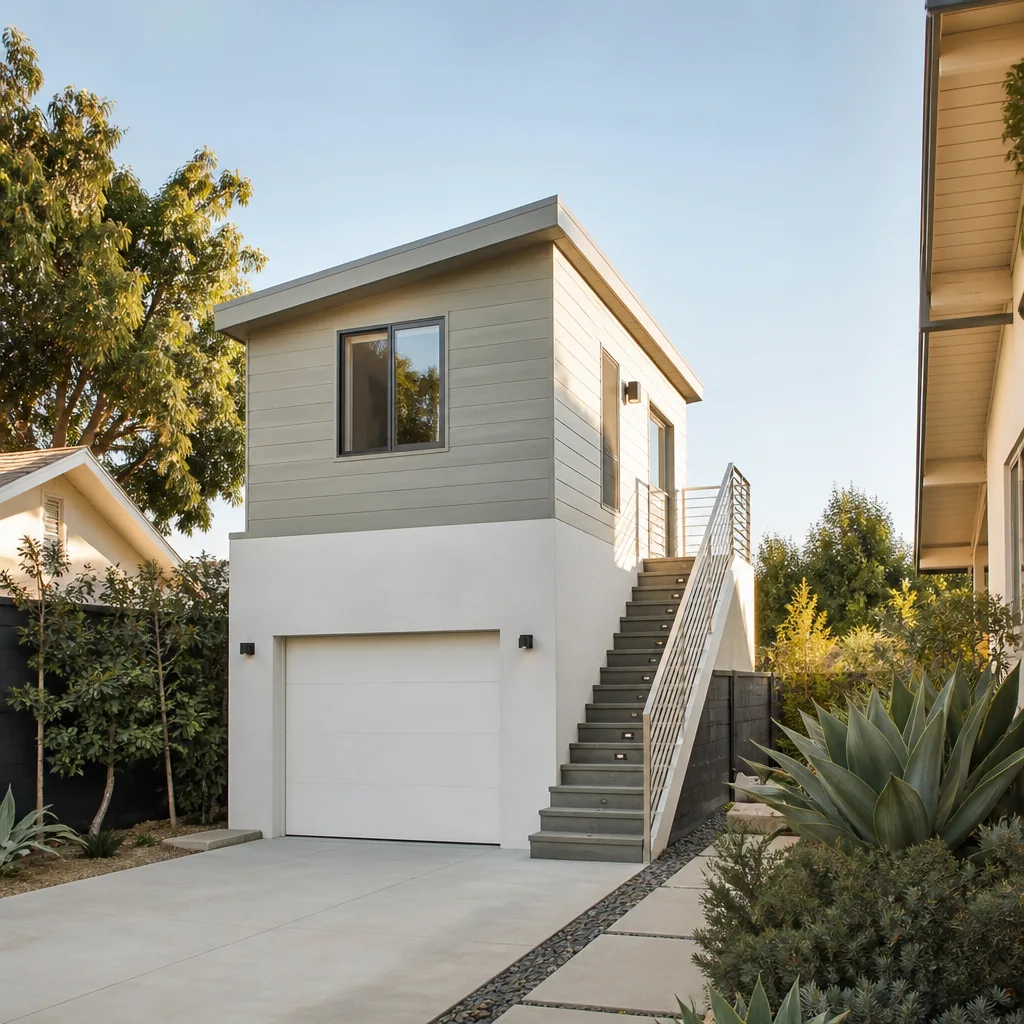
The DIY-versus-professional decision for a Houston ADU is not a test of your handyman skills. It’s a test of your understanding of what creates lasting property value. The work that matters most, the electrical, plumbing, HVAC, and structural systems, is the work you’re legally restrained from doing yourself and the work that carries the most risk when done wrong. The work you’re best positioned to do, finish carpentry, painting, flooring, is the work that carries no risk at all. Most Houston homeowners should build a hybrid: hire a licensed professional for the systems, do the finish work yourself, pull every permit, and keep every receipt. For a detailed breakdown, see our Home Addition Contractor Maintenance Checklist for Houston Homeowners. That’s the path that produces a buildable, rentable, sellable ADU. It’s the path we’ve watched work in Houston since 2010.
Written by Russ Delmar, Owner at Lodgewick ADU Houston, serving Houston since 2010. Explore more guides & resources on ADU planning and construction.