Why Houston Homeowners Choose Cover ADU
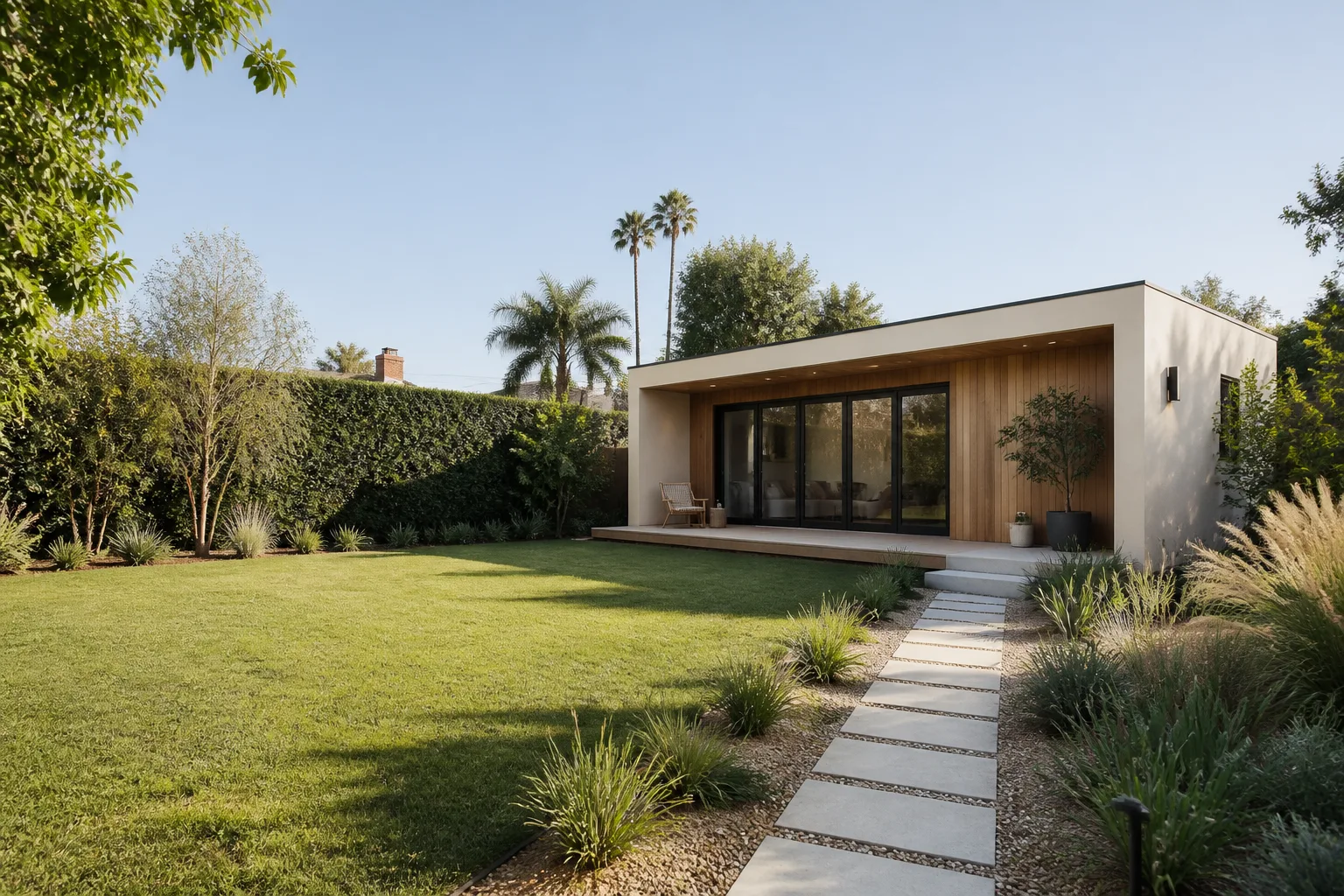
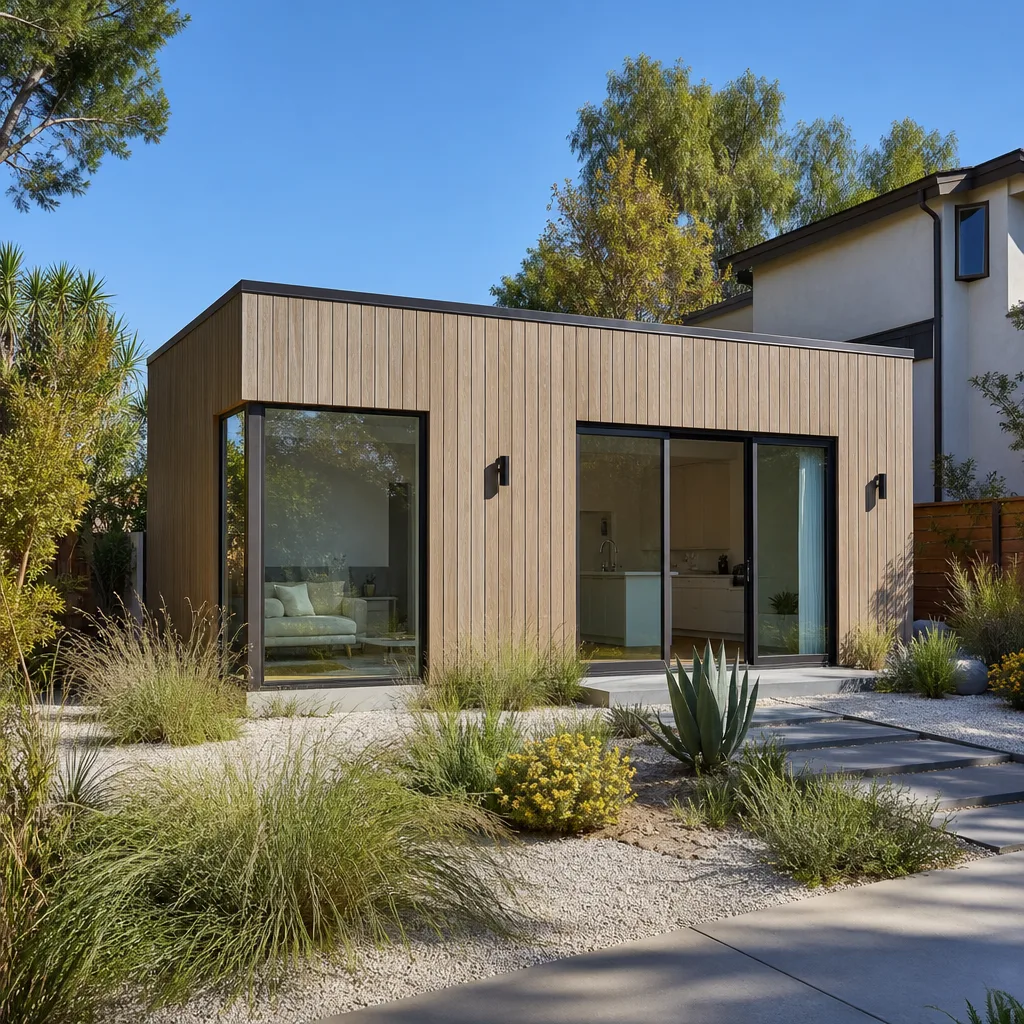
We provide Cover repair in Houston as an independent ADU service, and we’ve been doing it long enough to know exactly how these steel-frame units behave in our Gulf Coast climate. Cover builds a genuinely smart prefab ADU (accessory dwelling unit, meaning a second livable structure on your existing lot), but Houston’s humidity, expansive clay soil, and summer storm cycles put real stress on the panel system in ways the manufacturer’s California testing never anticipated. Our crew at Lodgewick ADU Houston is not affiliated with or authorized by Cover. We’re an independent service provider, which means we answer to you, not to a corporate service network. If your Cover S, M, L, or Duo Series unit needs a repair that lasts through hurricane season, call (361) 326-2313 and we’ll give you a straight answer and a written price.
Why Trust Lodgewick ADU Houston for Your Cover ADU?
Russ Delmar, our owner, grew up in Los Angeles and learned the building trade at Los Angeles Trade-Technical College before spending decades in the field. He and our crew have been working Houston territory for years, and we’ve serviced Cover units from Garden Oaks to Third Ward, from the Heights out past Katy Cover service areas. That experience matters because Cover ADUs are not like stick-built garages or site-built additions. The steel-frame panel system has its own torque specs, its own sealing requirements, and its own failure points. We know the difference between a fastener that was under-tensioned at the factory and one that has loosened due to clay-soil settling. We know which Cover panel joints are most likely to open up after a few Houston summers of thermal expansion. And when we show up, the technician at your door is background-checked and uniformed, so you always know who’s on your property. Every project we take, Cover or otherwise, runs under The Kingswell Guarantee: a written price before work begins, a real arrival window, a clean job site, and a written guarantee with a free return visit if the work fails within the 365-day guarantee period. Russ is known for telling people exactly what a project costs before anything starts, and for finishing on the schedule he writes down. That’s rare enough that homeowners remember it.
Common Cover ADU Problems We Fix in Houston
Cover’s panelized steel-frame construction is efficient and precise, but Houston’s climate exposes weaknesses that don’t show up in drier, cooler markets. Here’s what we actually see on service calls:
- Condensation on steel framing at wall-to-roof intersections. Houston’s humidity is relentless, and Cover’s steel studs and roof framing create thermal bridges at the corners where wall meets roof. Warm, moist air hits the cooler steel and condenses, which leads to water staining, musty smells, and eventually mold inside the wall cavity. On Cover S Series (studio) and M Series (one-bedroom) units especially, we see this at the eave line. The fix usually involves improving the ventilation path and adding a vapor barrier detail at the transition, not just wiping down the surface. We’ve corrected this on enough units to know it’s a systemic Houston issue, not a one-off.
- Window flashing gaps that leak during summer thunderstorms. Cover’s factory-installed window flashing is adequate for California’s light rain, but Houston gets 50-plus inches a year, often in violent squalls. The flashing detail can pull away or fail at the corners, letting water run down the inside of the panel joint. We’ve pulled panels apart and found rot starting behind a window that looked fine from the outside. On one Cover S Series in Montrose, our tech found water staining on the ceiling after a June storm. The factory roof flashing had separated at the eave, letting water run inside the steel panel joint. We pulled the panel, replaced the flashing with a reinforced bent-metal version, and resealed all four corners. No more leaks, even in a 2-inch rainfall.
- Improperly tensioned fasteners causing panel rattling after settling. Houston sits on expansive clay soil that swells when wet and shrinks when dry. Over time, that movement transfers through the foundation and loosens the mechanical fasteners holding Cover’s steel panels together. You’ll hear it as a rattle or creak when the wind picks up or when someone walks across the room. The proper repair is not just tightening the visible screws. We re-tension the fasteners to Cover’s specified torque, and in cases where the soil movement has been significant, we’ll recommend a foundation-leveling assessment before the panels get re-secured.
- Roof panel seams separating from thermal expansion. Steel expands and contracts with temperature swings, and Houston’s summers push surface temperatures on a dark roof well above 150 degrees. Cover’s roof panels are designed with a sealant joint that eventually fatigues under repeated expansion cycles. If you look closely at the roof seam and see gaps, hairline cracks, or sealant that’s pulled away from the metal, that joint is failing. Left alone, it becomes a water entry point. We replace the seam sealant with a marine-grade product that holds up better in humid coastal air than what the factory installed. On severe cases, the panel itself gets replaced.
- Waterlogged foam core panels from undetected leaks. Cover’s wall panels have an insulated core, which is great for energy performance, but it also means a small leak can saturate the insulation and not show up on the interior drywall for months. By the time you see a stain, the panel’s R-value is already compromised and the steel skin may be starting to corrode from the inside. We use a moisture meter to check suspect panels, not just a visual inspection. If the foam core is waterlogged, patching doesn’t solve it. We recommend full panel replacement. That’s the honest answer, and it’s the one we’d want if it were our ADU.
Cover Parts & Our Repair-vs-Replace Approach
Cover ADUs use proprietary panel connections and weatherproofing details, and we use Cover’s OEM fasteners and weatherproofing kits whenever they’re available and appropriate. But here’s the reality in Houston: Cover’s standard weatherproofing components were not designed for our combination of 90-percent humidity, salt-tinged coastal air, and intense UV exposure. For common consumable parts like flashing, sealant, and exterior fasteners, we often use marine-grade stainless or equivalent aftermarket materials that outperform the originals in our specific conditions. That’s not cutting corners. That’s using the right material for the environment. When it comes to structural panels, the decision is simpler: if a panel is severely corroded, or if its foam core is waterlogged, we recommend full panel replacement rather than patching. A patched panel in Houston is a future callback. A replacement panel is a five-to-ten-year fix. We’d rather tell you that upfront and have you make an informed decision. For an honest assessment of your Cover ADU, call (361) 326-2313 and we’ll come take a look. The estimate is free.
Our Cover Service Process – Step by Step
- 1
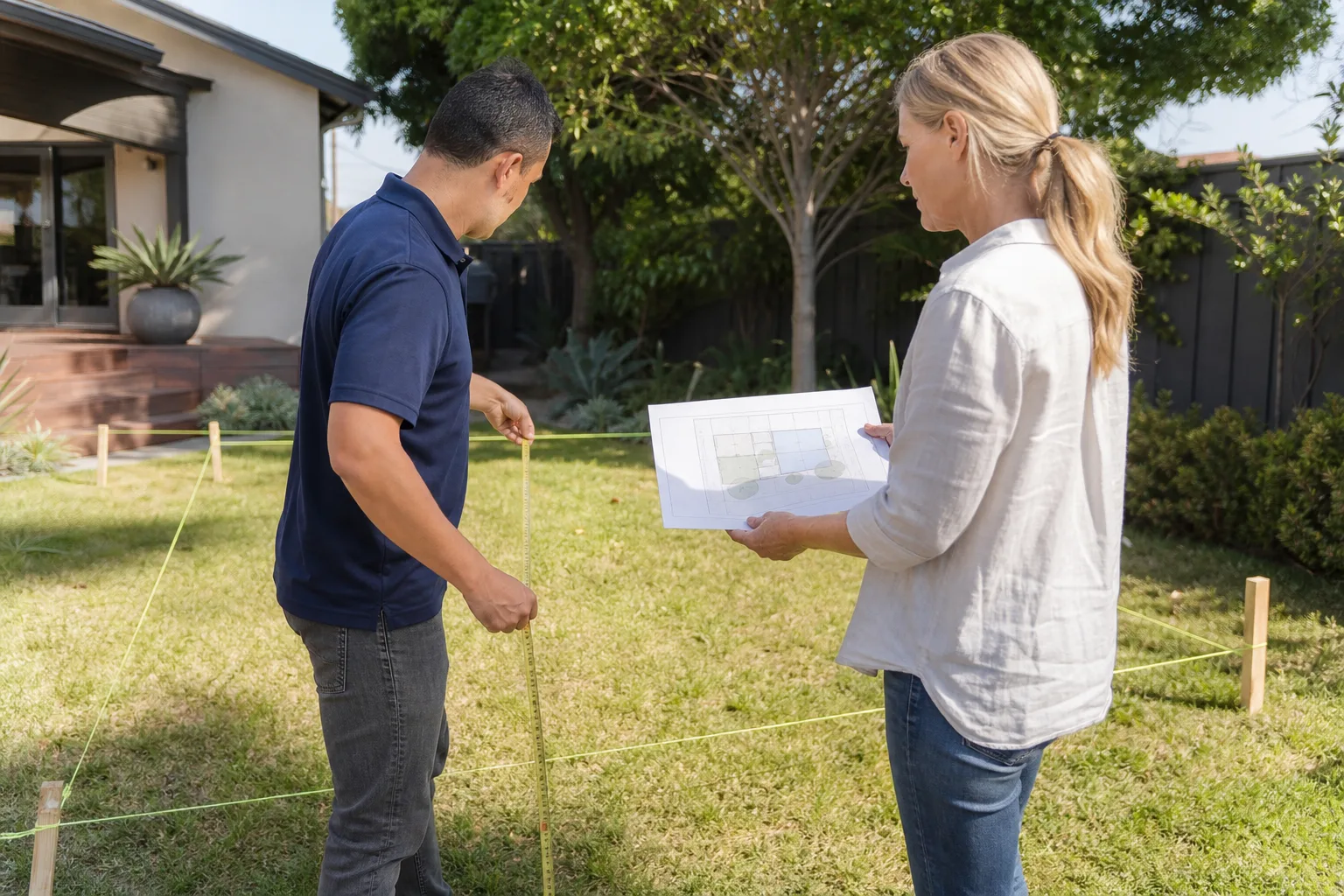
Diagnosis. We start with a site assessment that includes a visual inspection of all panel joints, window and door flashings, roof seams, and foundation contact points. On Cover units specifically, we check the torque on structural fasteners at the panel-to-panel connections and examine the wall-to-roof intersection for early condensation signs. We use a moisture meter on the interior drywall around windows and at the base of walls, where Houston humidity problems tend to show up first. The written diagnosis tells you exactly what’s wrong and what it will cost to fix, before any work is authorized.
- 2
Repair or install. We don’t send a generic handyman. Our technicians are trained on Cover’s panel system, and every repair uses fasteners and sealants rated for our climate, not just whatever the factory shipped from Arizona. If foundation movement is part of the problem, we address the grading or foundation issue before re-securing panels, because fixing panels on a shifting foundation means doing the same repair twice.
- 3
Test. After the repair, we test. That means running water over the repaired area, checking torque values on every fastener we touched, and verifying that the panel seams are fully sealed. If your ADU has an HVAC system, we verify it’s still performing after any panel work. We don’t call a job done until we’d be comfortable sleeping in the unit during a July thunderstorm.
- 4
Warranty. Every Cover service job we do comes with The Kingswell Guarantee in writing: a 365-Day Done Right Promise. If the work isn’t right, we come back and make it right. No charge. That’s not a verbal promise. It’s a written guarantee, delivered before the work begins. If the work fails within the guarantee period, you get a free return visit. That’s how we’ve always done it.
Cover Products We Service & Install in Houston
We service every Cover model line currently in production, plus units that have been on Houston lots for years. That includes the Cover S Series (studio), Cover M Series (one-bedroom), Cover L Series (two-bedroom), and the Cover Duo (two-story). We stock common weatherproofing components, marine-grade fasteners, and sealants locally so we’re not waiting on a shipment from the factory when a roof seam opens up in August. We also handle site assessment, foundation and grading, and energy compliance work on Cover installations, as well as our Home Addition Contractor services. Whether your unit was placed by another contractor or by Cover’s own network, we can take over the service and make it right.
We Also Service These Brands
Cover isn’t the only prefab system we work on. We also service Abodu and Dvele ADUs across the Houston area, and we bring the same climate-specific approach to every brand. If you own a different prefab unit, or you’re not sure what you have, call us. If we don’t know a system, we’ll tell you before we take the job.
FAQs – Cover ADU Service in Houston
No. We are an independent Cover service provider, not a Cover-authorized dealer or warranty agent. That means we’re not bound by Cover’s service network pricing or availability. It also means we can speak freely about what a repair actually requires, and we can use aftermarket materials that outperform Cover’s factory components in Houston’s climate. For warranty-covered factory defects, you’ll still need to go through Cover directly. For everything else, call (361) 326-2313.
We use Cover OEM fasteners and weatherproofing kits when they’re available and appropriate for the repair. For consumables like exterior sealant, flashing, and fasteners exposed to Houston’s humidity and coastal air, we often select marine-grade stainless or equivalent aftermarket parts that hold up better than the factory components. The goal is the longest-lasting repair in this specific climate, not brand loyalty for its own sake.
Most common repairs, including flashing replacement, seam resealing, and fastener re-tensioning, are completed in one to three days depending on the scope. Full panel replacement, especially on a Cover S or M Series unit, typically takes three to five business days including material lead time from our local stock or supplier. We give you a written schedule before work starts, and we stick to it. Call (361) 326-2313 and we’ll give you an exact timeline for your specific repair.
We service all Cover model lines: the S Series studio, M Series one-bedroom, L Series two-bedroom, and the Duo two-story. The panel system and fastening details are consistent across the line, but each model has its own roofline and window package, which means slightly different failure points in Houston weather. We’ve worked on enough of each model to know where the problems hide.
Any repair or modification done by an independent provider can affect your factory warranty, depending on what Cover’s warranty terms say and what the repair involves. We recommend checking your Cover warranty documents before authorizing work, and we’ll walk you through that process. For routine maintenance, leak repairs, and consumable replacements, most owners find the warranty impact is minimal to nonexistent. For anything structural, we’ll help you talk to Cover directly. That’s part of being straight with you.
A new Cover ADU in Houston, including site prep, foundation, utilities, and installation, typically runs $90,000 to $160,000 depending on model, size, finishes, and lot conditions. Service and repair work is priced per job. A flashing replacement or seam reseal might run a few hundred dollars. A full panel replacement can run several thousand depending on the panel and access. We give every customer a written price before work begins, so you’ll know your exact number before you approve anything. Call (361) 326-2313 for a free estimate on your specific project.
That humid feeling is usually condensation forming on the steel framing at the wall-to-roof intersection, and it’s the most common Cover-specific issue we see in Houston. The steel conducts cold from the air-conditioned interior to the panel exterior, and Houston’s humid air condenses on the metal inside the wall cavity. The AC keeps running because the thermostat reads temperature, not humidity. The fix involves improving ventilation and adding a vapor barrier at the transition, and we can diagnose the exact source in one site visit.
Yes, we can add a bathroom to a Cover S Series studio, but it’s a structural modification, not a simple remodel. It involves cutting into the steel panel system, framing the addition, tying into existing plumbing, and re-sealing every panel joint according to Cover’s structural specifications. We’ve done this type of addition in Houston, and it requires a permit and inspections, which we handle as part of the project. Call (361) 326-2313 with your unit’s model and we’ll give you a realistic scope and price range.
Some thermal expansion noise is normal for any steel-frame structure, especially during Houston’s big temperature swings from hot afternoon to cooler night. But a creak that gets louder over time, or a rattle that responds to wind, usually means fasteners have loosened, which is common on Houston’s expansive clay soil. We re-tension the fasteners to Cover’s torque spec and check for any panel movement. It’s a quick assessment, and it prevents bigger problems later.
Adding windows to a Cover ADU requires cutting into the steel panel structure, and the placement has to respect the panel’s load path. We can install new window openings and reinforce the surrounding framing, but we’d recommend starting with a solar tube or skylight in the roof panel if the space allows, since that’s a less invasive change with a smaller risk profile. For any opening you add, the flashing detail has to be overbuilt for Houston rain, because that’s where factory openings fail first in this climate.
Yes, but it’s not like moving a Tuff Shed. A Cover ADU relocation involves disconnecting utilities, disassembling the panel system at the factory seams, transporting the panels, and re-assembling them on a properly prepared foundation at the new lot, with new weatherproofing throughout. It’s a significant project that costs more than most homeowners expect, and we’ll give you an honest price range before we start. Permits and inspections are part of the job. Call (361) 326-2313 if you’re considering a move, and we’ll walk you through what’s realistic for your specific unit and lot.
Book Your Cover Service in Houston, TX
If your Cover ADU needs service, maintenance, or Cover in Spring or Houston, call (361) 326-2313 and talk to a live person today. We’ll schedule a site assessment, give you a written diagnosis, and provide a written price before any work starts. Tell us what you need the space to do, and we’ll tell you exactly what it takes to get there.
Written by Russ Delmar, Owner at Lodgewick ADU Houston, serving Houston since 2010.