Dvele Site Prep & Utilities: The Houston Owner’s Guide
If your Dvele home’s site prep or utility connection is failing, we stock and install compatible components throughout Houston for a typical installed range of $1,800 to $7,500 depending on what’s failed and how far along the damage runs. Most utility-side fixes we complete same-day once we’ve seen the site, because a Dvele’s systems are modular and designed for straightforward component swaps. You’ll usually find out something’s wrong the Houston way: a sewage smell after heavy rain, breakers tripping on a humid afternoon, or water pressure that drops every evening when your sprinklers kick on.
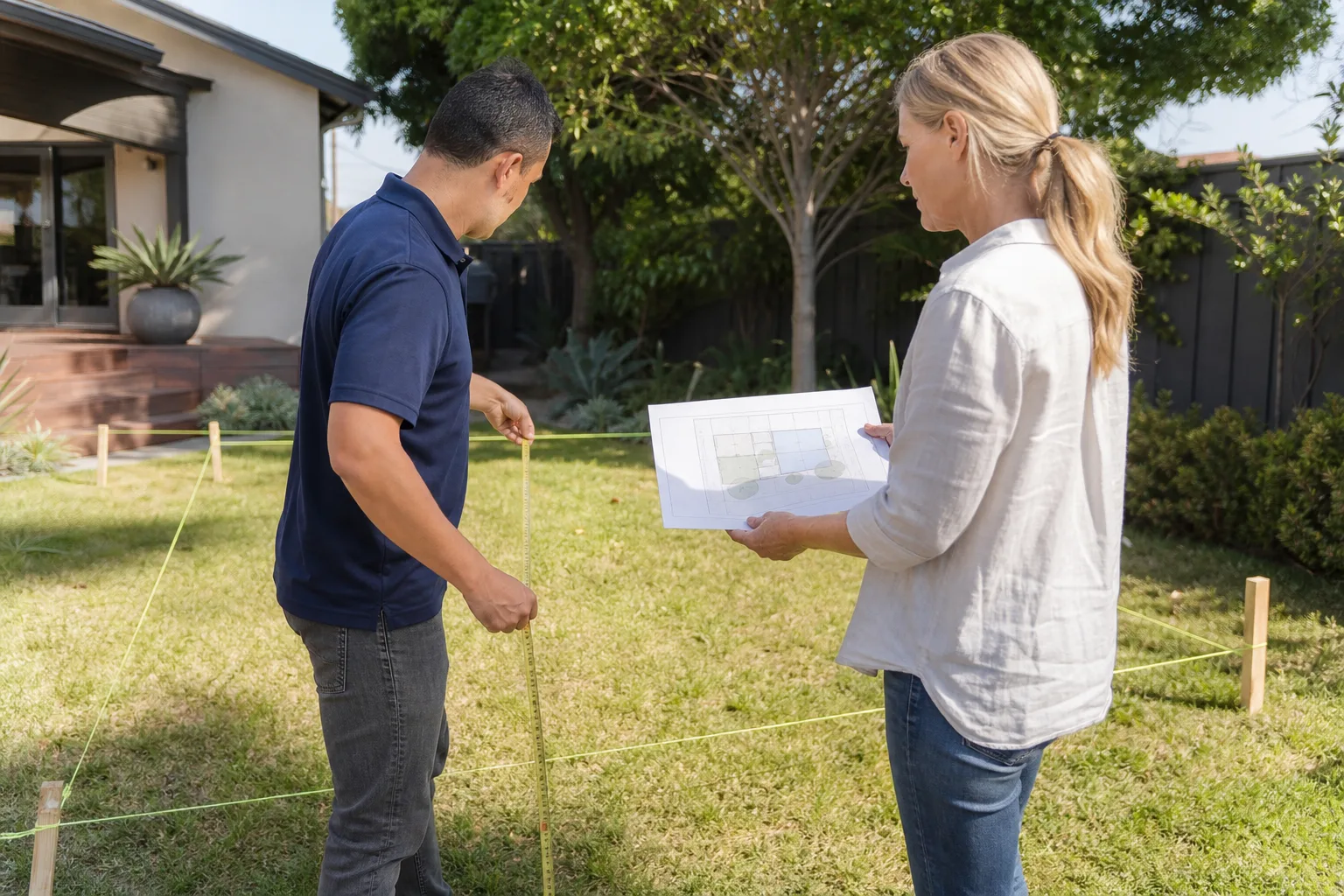
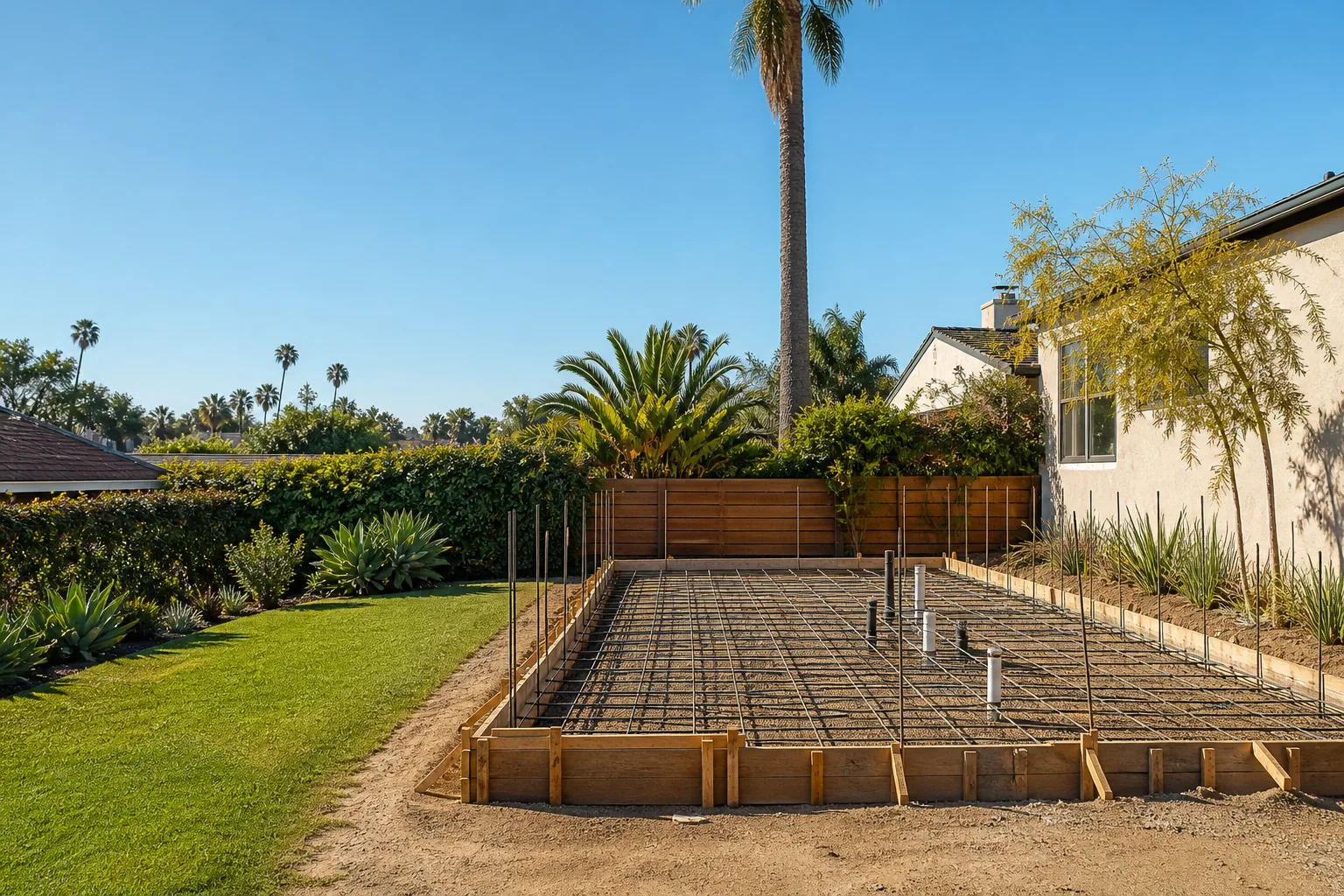
Dvele builds homes differently than stick-built construction. The panels arrive pre-wired and pre-plumbed, which means the site prep and utility connections at the slab level have to be exact. When they’re not, the failure shows up within the first two years, usually at the connection points. We’re an independent Houston service provider, not affiliated with Dvele, but we’ve worked on enough of their homes across the Heights, Montrose, and out toward Katy to know precisely where those connections fail and what it takes to put them right.
Which Dvele Models This Applies To
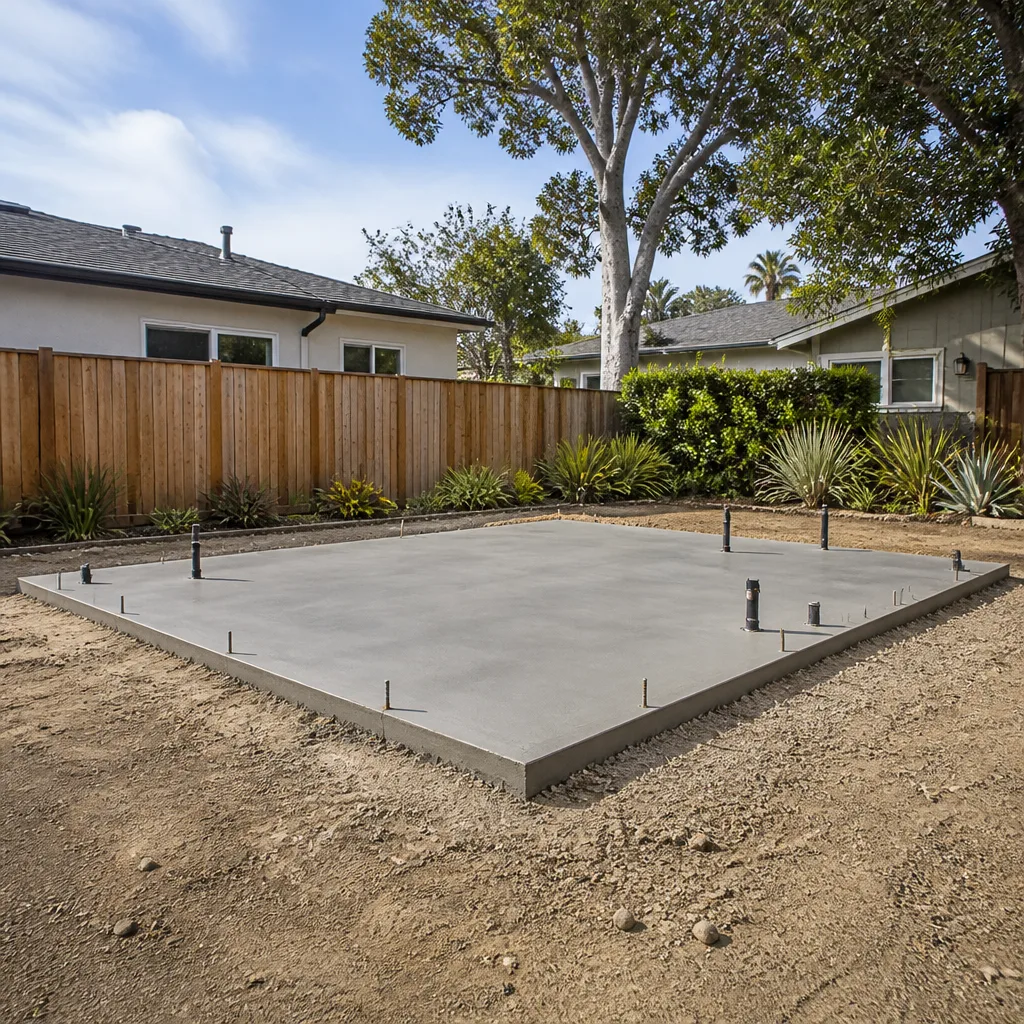
Dvele’s current lineup centers on the Dvele IQ series, which includes the IQ, IQ+, and IQ Max models ranging from roughly 600 to 2,400 square feet. The site prep and utility connection setup is nearly identical across all three: a steel chassis, a pre-plumbed wet wall, a consolidated mechanical core, and a main electrical panel landing that comes pre-fed from the factory. The compatibility difference that matters for most Houston owners is between the original Dvele homes (2018 to 2021 production) and the current IQ generation. The original models used a slightly different utility chase routing under the floor cassette, and if you’re sourcing a replacement connection kit or chase fitting, the IQ-series part will not bolt up cleanly to the older homes without a field adapter.
Here’s what to check before you call: on the side of your Dvele’s mechanical closet, there’s a data plate with the model designation and serial number, plus a three-letter plant code. Take a photo of it. When you send that over, we can confirm the exact utility connection spec in about five minutes instead of guessing. Dvele’s factory specs call for a 200-amp service on the IQ and IQ+, with the IQ Max sometimes pulling 400 amps depending on the all-electric package. If your home was set up by a Houston electrician unfamiliar with the modular spec, you’ll often see a 150-amp main breaker serving a home that wants 200, and the panel will trip on the hottest afternoons when the heat pump and the oven run together. That’s a site prep issue, not a Dvele defect.
On the OEM versus aftermarket question: Dvele sources nearly all of its utility-side components from standard commercial suppliers, so there’s usually no reason to pay a premium for factory-branded plumbing fittings or chase connectors. The exception is anything inside the wall cassette itself. Those are proprietary and should stay Dvele-spec. The slab-side connections, the water service entry, the sewer stub, the electric feeder, and the low-voltage conduit, are all standard commercial components that quality aftermarket suppliers build to the same or better spec. We’ll tell you honestly which one you need, because we don’t make money selling you a marked-up connector when a standard one is the right fix.
Signs Your Dvele Site Prep & Utilities Is Failing
- Low water pressure only at certain fixtures. Dvele’s modular wet wall routes supply lines through a central manifold. If pressure drops at one bathroom but not the kitchen, you’ve usually got a kinked flex line or a partially closed isolation valve at the manifold connection, not a main line problem.
- Sewer odor after rain. Houston’s clay soil expands and contracts through wet-dry cycles, and a Dvele slab sitting on poorly compacted base will move a few millimeters. That’s enough to crack a PVC sewer stub where it exits the chassis. The smell appears after rain because the water table rises and pushes gas up through the crack.
- Breakers tripping on humid afternoons. When the outdoor electrical feeder termination wasn’t torqued to spec at install, the Texas humidity accelerates oxidation at the lugs. Resistance builds, heat follows, and the main trips exactly when the AC pulls hardest.
- Standing water near the foundation after normal rain. Dvele homes sit on a shallow steel chassis, and proper site prep means positive drainage away from all four sides. If water pools within six feet of the home after an ordinary Houston downpour, your grade has settled and the stormwater path has reversed toward the chassis.
- Water heater cycling constantly or running out fast. Dvele routes the heat pump water heater’s condensate line through the same chase as the main supply. When the chase seal fails, Houston’s humidity loads the line, the system works harder, and you get lukewarm showers by 7 PM.
Replacement Cost & What’s Included
For Houston Dvele owners, here’s the range we quote most often:
- Sewer stub repair or replacement: $1,800 to $3,400 depending on depth and whether the chassis connection needs resealing
- Water service entry repair: $900 to $1,800 for supply line replacement and manifold reconnection
- Electrical feeder termination repair: $1,200 to $2,500 including new lugs, torque to spec, and a thermal imaging check
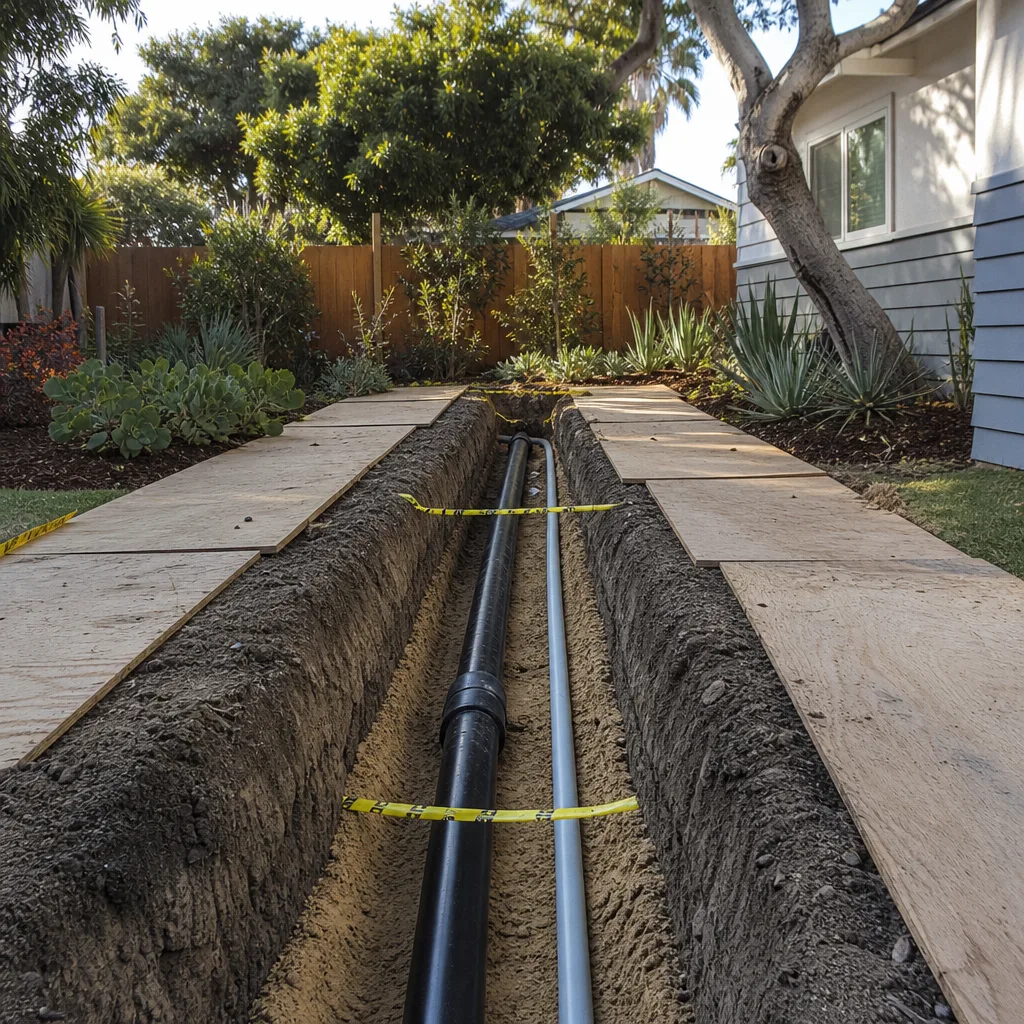
- Full utility trench, bedding, and reconnect: $4,500 to $7,500 when the original site prep failed and everything needs to come up and go back right
The main drivers on price are trench depth, whether we’re cutting through Houston clay or hitting an old utility conflict, and how far the damage has crept past the original failure point. Every quote includes parts, labor, haul-off, and a written scope of work before we start. You get the Kingswell Guarantee on the repair: a written price first, a defined arrival window, a clean work site when we leave, and a written guarantee that covers the fix for 365 days. If it fails within that year, we come back free.
DIY or Call Us?
There’s real danger here that most Houston homeowners don’t see until it’s too late. Anything involving your home’s main electrical feeder means live 200-amp conductors, and that is not a job for a confident weekend with a YouTube tutorial. The same goes for trenching near gas service lines. Call 811 before anyone digs, and call a licensed crew for any excavation that gets within four feet of a marked utility.
What you can safely do yourself: photograph the data plate, check your breaker panel for tripped mains, note which fixtures lose pressure, and mark exactly where water pools after rain. That information saves us an hour of diagnosis, which saves you money. What you shouldn’t do: open a service panel, dig a trench, or try to reseal a sewer connection with hardware store caulk. If it fails again in six months, it’ll cost twice as much to fix properly. If you’re in Houston and you’re seeing any of the signs above, call (361) 326-2313 and we’ll get you a written price before any work starts.
FAQs
A properly installed Dvele utility connection should last 20 to 30 years in Houston’s soil, but we regularly see original installations fail in year two or three because the site prep was rushed. The failure is almost always at the transition points where flexible modular connections meet rigid in-ground utilities. If your home made it past year five without signs of trouble, the long-term outlook is good.
About 70% of the Dvele utility failures we see in Houston are repairable at the connection point without a full replacement. A cracked sewer stub near the surface can be cut back and resealed. A corroded electrical lug can be replaced and retorqued. It’s only when the original trench was dug wrong or the bedding failed that the whole run has to come up. We’ll tell you which one you have after we look, and the price is in writing either way. Call (361) 326-2313 to schedule an assessment.
Most single-connection repairs on a Dvele home take us four to six hours on site once the trench is open and the parts arrive. A full utility reconnection, where we’re replacing the sewer stub, water service, and electrical feeder, usually runs two days. You’ll have water and power back the same day in nearly every case because we stage the work so the home is never fully offline overnight.
We stock the common Dvele-compatible site prep components on our trucks and at our Houston shop: sewer stubs in the sizes Dvele’s chassis calls for, water service fittings, electrical lugs and feeders, chase seals, and the manifold connectors used in the wet wall. For rare factory-specific chase components, we order through the same commercial suppliers Dvele uses, which usually gets parts here in three to five days. Same for Abodu and Cover homes, by the way. If it’s a standard utility component, we likely have it on hand today.
If your Dvele’s site prep or utilities are acting up anywhere in Houston, call (361) 326-2313 for a free estimate. We’ll put the price in writing before any work begins, show up in the window we give you, and stand behind the fix for a full year.
Written by Russ Delmar, Owner, Lodgewick ADU Houston at Lodgewick ADU Houston, serving Houston and nearby areas.